

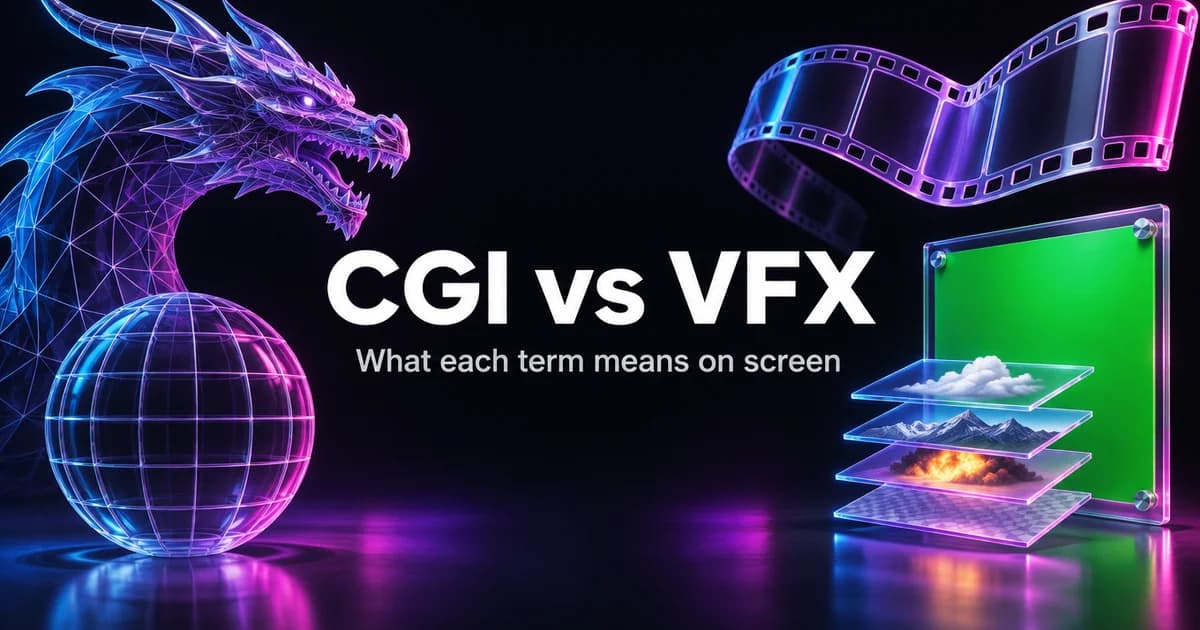
The CGI meaning is computer-generated imagery: any image or animation made with computer graphics, such as a digital dragon, a fully animated film or a product render. The VFX meaning is visual effects: the work of creating or changing imagery outside what the camera captured on set — compositing green-screen shots, adding skies, removing wires, extending sets. The two overlap but aren't the same: CGI is one of the main tools VFX artists use, and VFX also includes work that involves no CGI at all. Practical effects done on set, like explosions or animatronics, are a third thing: SFX, or special effects.
Updated 12 November 2026.
What does CGI mean?
CGI stands for computer-generated imagery. Wikipedia describes it as a specific use of computer graphics to create or improve images, still or moving. The term covers 2D graphics, but it usually means 3D: models built, textured, lit and rendered in software.
CGI isn't limited to film. It's used in:
- Animated films made entirely in 3D.
- Video games, where the CGI is rendered in real time.
- Advertising, from product renders to the sponsor graphics overlaid on sports pitches.
- Architecture, medicine and science — building visualisations, anatomy models, simulations.
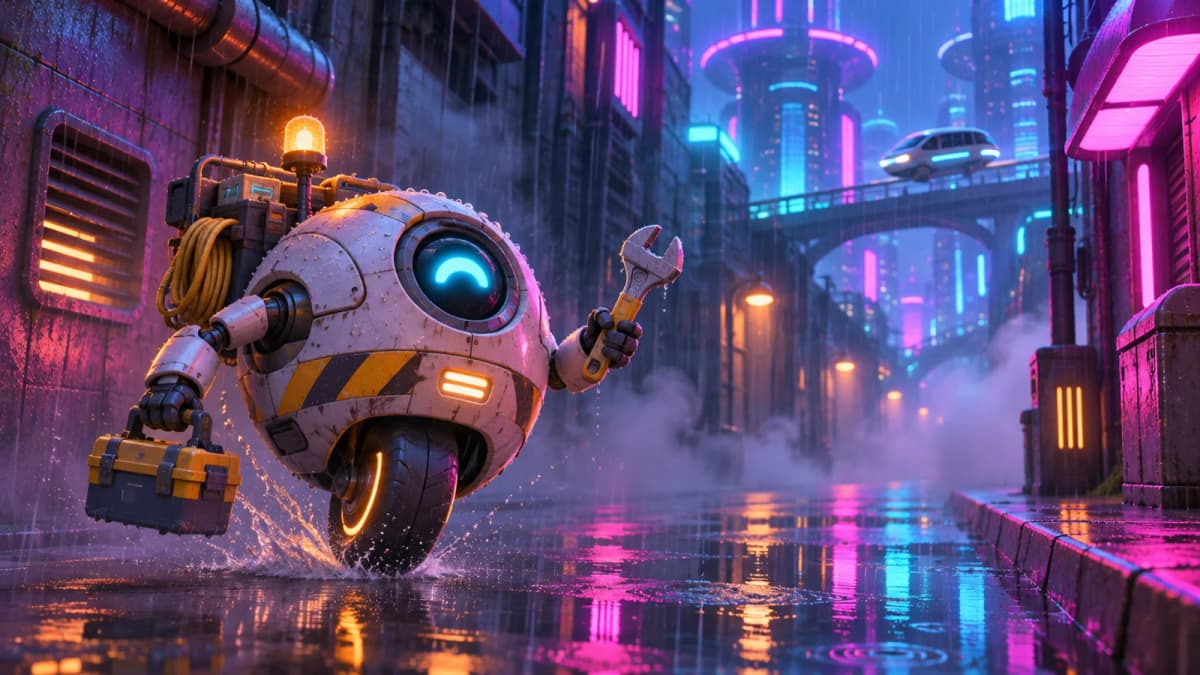
A fully computer-generated shot: there's no live-action footage in it at all, so it's CGI but not VFX in the usual sense. Made with GPT Image 2.6 on Kenerate as an illustration of the look.
What does VFX mean?
VFX stands for visual effects. Wikipedia's definition: the process by which imagery is created or manipulated outside the context of a live-action shot. In practice that means combining what the camera filmed with other footage or generated elements, to show something too dangerous, expensive or impossible to film for real.
VFX is mostly done in post-production, after the shoot. Its main techniques include:
- Compositing — combining elements from separate sources into one image.
- Chroma keying — filming against a green or blue screen so the background can be replaced later.
- Matte painting — painted (now usually digital) backdrops of places you can't film.
- Rotoscoping and clean-up — tracing elements frame by frame, removing wires, rigs, crew or modern objects.
- Match moving — tracking the real camera's motion so CG elements sit in the shot.
- Motion capture — recording an actor's movement to drive a digital character.
- CGI — creatures, vehicles, crowds, explosions, set extensions.
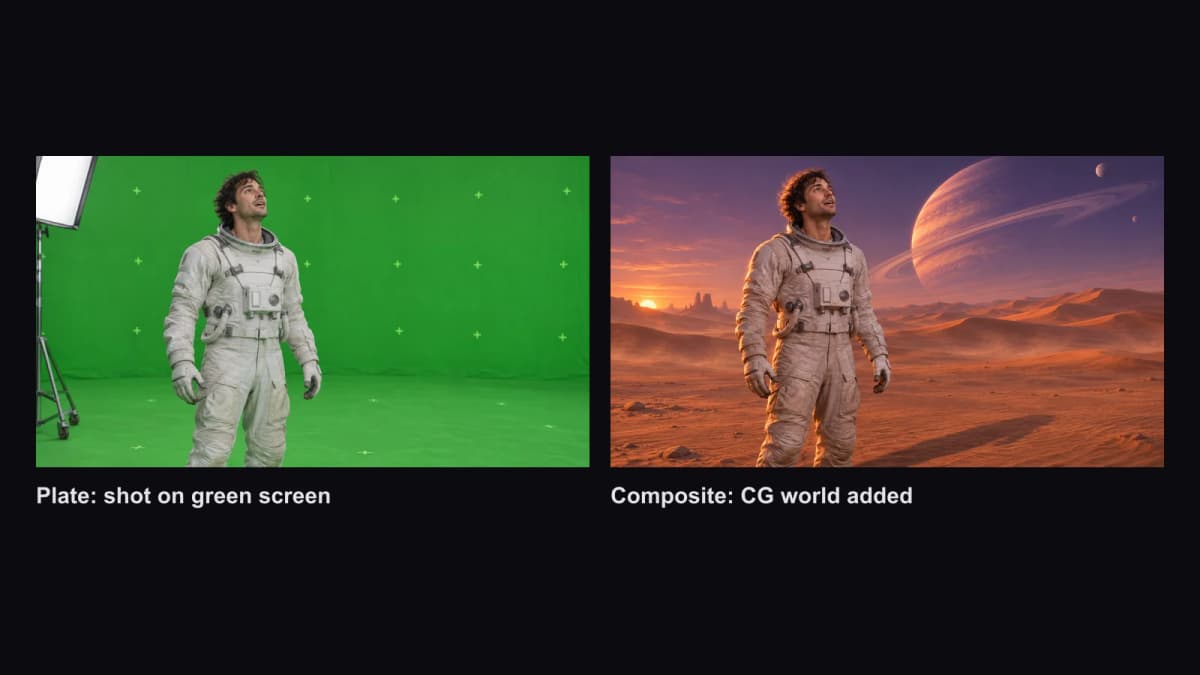
VFX in one step: the plate shot on green screen (left) and the composite with a CG world added (right). Both made with GPT Image 2.6 on Kenerate to illustrate the idea — on a real production this is done with keying and compositing software, frame by frame.
What's the difference between CGI and VFX?
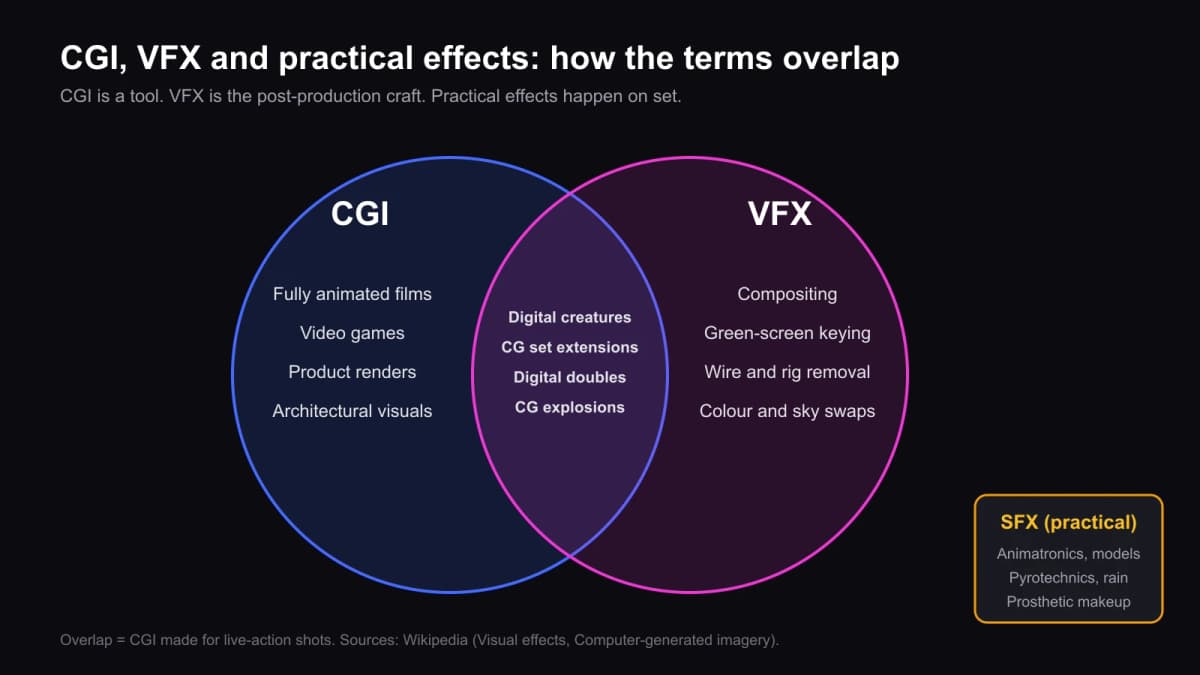
The cleanest way to hold it in your head: CGI is a tool; VFX is a craft that uses that tool, among others.
| CGI | VFX | |
|---|---|---|
| Stands for | Computer-generated imagery | Visual effects |
| What it is | Images made with computer graphics | Creating or altering imagery outside the live-action shot |
| Needs live-action footage? | No — can be entirely synthetic | Usually yes: it changes or adds to filmed shots |
| Includes non-CG work? | No | Yes: keying, compositing, roto, clean-up, colour and sky replacement |
| Typical examples | Animated features, games, product renders, digital creatures | Green-screen composites, wire removal, set extensions, digital crowds |
| When it happens | Any time; for film, mostly in post | Mostly post-production |
Where they overlap is the part people usually mean by "CGI in movies": a CG creature, a digital double or a CG explosion placed into a live-action shot. That is CGI and VFX at once.
How are VFX different from special effects (SFX)?
Special effects are physical or optical tricks, done during the shoot. Wikipedia separates mechanical (practical) effects — props, scale models, animatronics, pyrotechnics, rain machines, prosthetic makeup — from visual effects, which are mainly digital and done afterwards.
Most modern productions mix all three. A scene might use a real explosion (SFX), shot against a partial set that's extended digitally (VFX), with a CG creature walking through the smoke (CGI and VFX).
When did CGI start being used in films?
Wikipedia's history of CGI lists a few landmarks:
- 1973 — Westworld, described as the first feature film to use CGI with live action.
- 1982 — Tron, among the early films to incorporate CGI.
- 1993 — Jurassic Park, whose CG dinosaurs shared the screen with practical animatronics.
- 1995 — Toy Story, the first fully CGI feature film.
Is AI-generated video CGI or VFX?
It sits next to both. An AI video model doesn't build a 3D scene and render it the way traditional CGI does; it predicts the frames directly from a prompt or an image. But the result is still computer-generated imagery in the plain sense of the words, and when you use AI to replace a background, add an element or change a shot you filmed, you're doing a VFX job with a new tool.
For creators without a VFX pipeline, that's useful for previs, mood shots, backgrounds and short effects shots. On Kenerate, the AI video generator runs models such as Veo 3.1, Kling v3 Pro, Seedance 2.5 and Wan 3.0, and image-to-video animates a still frame, such as a matte-painting-style background:
AI Prompt RecipeFlux.1 Pro16:9“Slow cinematic push-in across an alien desert at dusk, orange dunes, a huge ringed planet low in a violet sky, two small moons, light dust haze drifting, no people, no text.”
AI clips still need the same checks as any effects shot: consistent lighting, believable scale and motion, and no artefacts on hands or edges. Video models on Kenerate need a one-time credit pack, from $15.
The short version
CGI is imagery made by computer, with or without filmed footage. VFX is the post-production work of adding to or changing filmed footage — and it uses CGI as one of many tools, alongside keying, compositing and clean-up. SFX are the physical effects done on set. When people say "the CGI in that movie", they usually mean CGI used as VFX.