

3D printing · how-to
How to make 3D models for 3D printing
There are four practical ways to get a printable model — pick by what you're making — and a handful of rules that decide whether it prints.
By the Kenerate AI teamUpdated 2 min read
Make a printable model with AI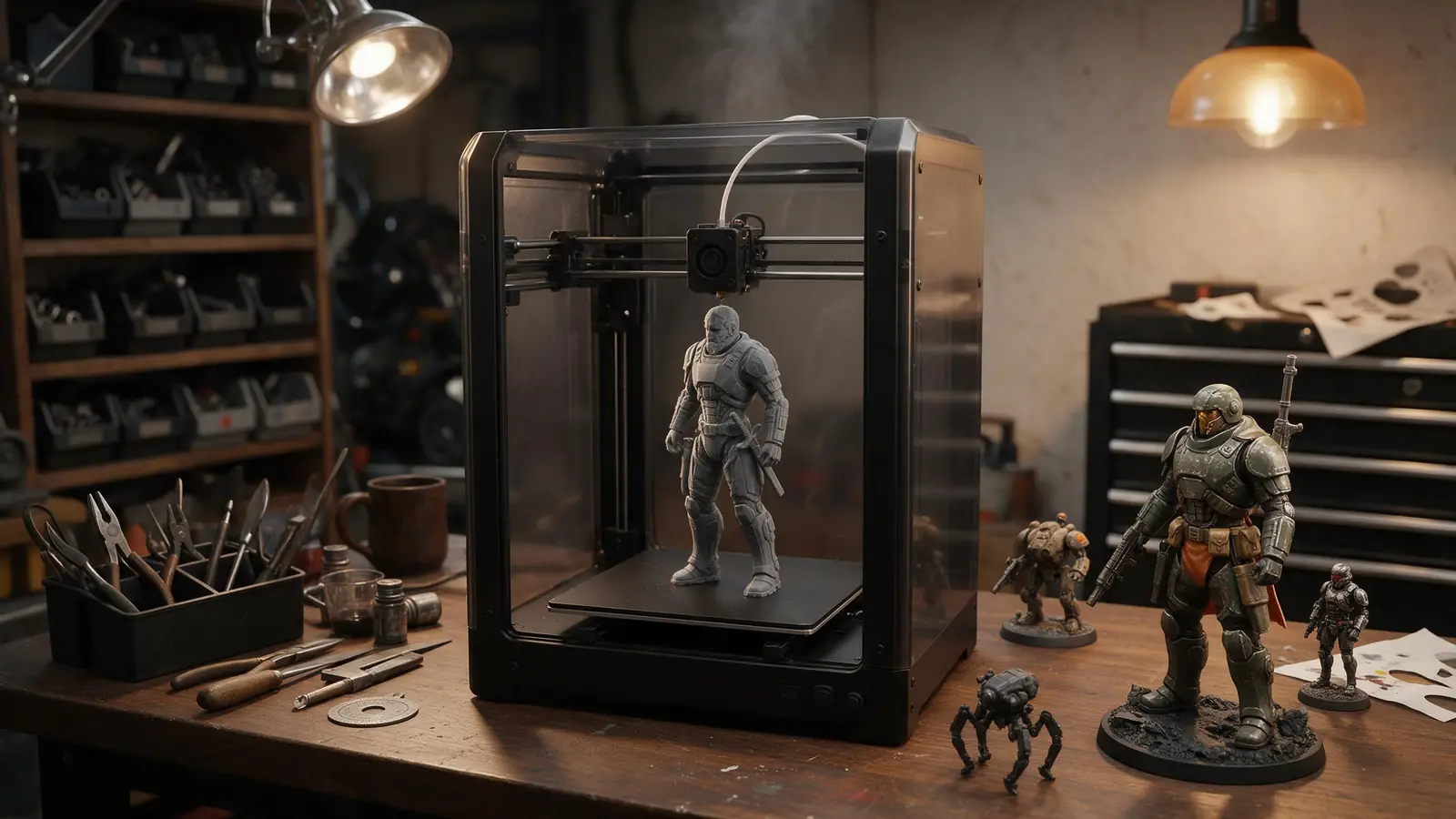
On this page
Quick answer
Updated
To make a 3D model for 3D printing, design it in CAD, sculpt it in Blender, generate it with AI from a photo, or convert a picture or text to STL. Then check it's watertight, with walls of about 0.9 mm or more and overhangs under 45°, set its size in millimetres and export STL or 3MF.
Key facts
- Functional parts
- CAD (Tinkercad, Fusion, FreeCAD)
- Organic shapes
- Blender / sculpting
- Figures and props
- AI from a prompt or photo
- Signs, reliefs, names
- Image / SVG / text to STL tools
- Rules
- Watertight · ≥0.9 mm walls · ≤45° overhangs · mm units
On this page
How to make 3D models for 3D printing
Four ways to make a printable model
| Method | Best for | Skill needed |
|---|---|---|
| CAD (Tinkercad, Fusion, FreeCAD) | Brackets, enclosures, replacement parts with exact dimensions | Low (Tinkercad) to medium |
| Blender / sculpting | Characters, organic shapes, art | Medium to high |
| AI 3D generation | Figures, miniatures, props, quick concepts | Low — describe or upload a photo |
| Image / SVG / text to STL | Lithophanes, reliefs, logos, signs, keychains | Low |
The rules that make a model printable
- Watertight: the surface must be closed with no holes, so the slicer knows what's inside [1].
- Wall thickness: one perimeter on a 0.4 mm nozzle is about 0.45 mm; two (≈0.9 mm) is a safer minimum [1].
- Overhangs: up to about 45° usually print without supports; steeper needs supports [1].
- Clearance: moving or fitting parts need around 0.3 mm of gap [1].
- Units: STL has no units, so set the size in millimetres before slicing [2].
Using AI to make the model
AI 3D generators turn a prompt or photo into a mesh in a few minutes. They shine for figures, miniatures, props and decorative pieces; for parts that must fit exactly, CAD is still the right tool. Ask for chunky, solid forms on a base, then convert to STL and check thin parts.
This guide compares the methods; to generate a model right now, the AI 3D Printing Model Generator does it from a prompt or a photo and returns STL from Rodin.
STL or 3MF?
Step by step
Step by step: from idea to print
Step 1
Choose a method
CAD for precise parts, Blender for sculpts, AI for figures and props, image/text tools for flat designs.
Step 2
Model or generate
Build the shape — or describe it / upload a photo in an AI 3D generator.
Step 3
Make it printable
Check walls (≈0.9 mm+), overhangs (≤45° or supports) and that the mesh is closed.
Step 4
Set the size
STL has no units — set the real size in millimetres (or export 3MF).
FAQ
How to make 3D models for 3D printing: questions
What's the easiest way to make a 3D model for printing?
For simple shapes, Tinkercad. For figures and decorative objects, an AI 3D generator. For names, logos and pictures, image/text-to-STL tools.
Link to this answerWhat software do I need?
None for AI and the browser tools; Tinkercad runs in a browser; Blender and FreeCAD are free downloads.
Link to this answerHow do I make an STL file?
Export from CAD or Blender, or convert another 3D file (GLB, OBJ, 3MF) with a free converter.
Link to this answerCan I make a 3D print from a photo?
Yes — as a full 3D object with AI image-to-3D, or as a lithophane or relief with image-to-STL tools.
Link to this answerHow thick should walls be?
At least about 0.9 mm (two perimeters) on a 0.4 mm nozzle for reliable prints.
Link to this answerMake a printable model with AI
Generate a figure or prop from a prompt or photo, then convert it to STL free.