




Progressive houseInstrumental126 BPM
Main Stage
Made with ElevenLabs Music v2.5 · Four-on-the-floor — easy to detect
—
PromptEuphoric progressive house instrumental, big supersaw drop, rolling bass, uplifting piano chords, festival energy, 126 bpm


Free · no upload · no sign-up
Drop in a song and this BPM key finder shows its tempo, musical key, Camelot code and relative key. It all runs in your browser, so the file never leaves your device. Tap along to double-check the BPM.
Tempo
—BPM
Load a track to analyse
Key
—
Estimate from the harmony
Analysed on your device — never uploaded
Updated by the Kenerate AI team
On this page
Quick answer
A BPM key finder reads an audio file and estimates its tempo and musical key. Load a song above and you get the BPM with half- and double-time options, the key, its Camelot code and the relative key, usually in seconds. It listens to up to 90 seconds from the middle of the track and runs on your device, so the file is never uploaded. The results are estimates, so confirm the tempo by tapping along.
Listen first
Download any of these AI tracks from the studio and run them through the finder — the tempo in each prompt is what we asked for; engines don't always hit it exactly, which is exactly why a finder helps.
Made with ElevenLabs Music v2.5 · Four-on-the-floor — easy to detect
PromptEuphoric progressive house instrumental, big supersaw drop, rolling bass, uplifting piano chords, festival energy, 126 bpm
Made with Ken Music 1.5 · Swung drums
PromptLo-fi hip-hop beat for studying, dusty drums, jazzy Rhodes chords, vinyl crackle, soft bass, 80 bpm
Made with Ken Music 1.5 · Half-time feel — watch for 71
PromptUK drill beat, sliding 808 bass, skippy hi-hats, dark piano melody, eerie strings, 142 bpm
Made with ElevenLabs Music v2.5 · Rubato — harder for BPM
PromptSolo piano ballad, tender and cinematic, simple memorable theme, soft dynamics swelling in the middle, concert grand
How to
Step 1
An MP3, WAV, M4A or OGG song, up to 60 MB.
Step 2
Tempo and key are estimated on your device.
Step 3
Tap along; consider half/double time.
Step 4
Mix with tracks one step around the wheel.
See it in the app

Open Music Studio and pick a song from a prompt, a song from your lyrics, or an instrumental.
Prompt & lyrics to song, instrumentals, models, your tracks & chat
Chapters
Engines
Facts from the app's engine list.

Kenerate
Best for
Default engine: full songs with vocals in any language; can take an image as inspiration
ElevenLabs
Best for
Set the exact duration; clean studio mix
Mureka
Best for
Writes its own lyrics from a prompt; style chips; MP3/WAV/FLAC
MiniMax
Best for
Follows [Verse]/[Chorus] section tags closely
Prompt recipe
Found the key and BPM of your reference? Make an original track to match.
A minor, 124
Original deep house instrumental in A minor, 124 bpm, warm bass, soulful chords
C major, 118
Original upbeat pop song in C major, 118 bpm, bright synths, female vocals
F♯ minor, 140
Original trap beat in F sharp minor, 140 bpm, dark bells, hard 808s
D major, 96
Original acoustic folk song in D major, 96 bpm, warm male vocals
Tempo
If the finder shows a tempo that feels wrong, check half or double.
60–80 BPM
80–100 BPM
100–130 BPM
120–135 BPM
130–150 BPM
170–176 BPM
Tips
What helps the finder — and what confuses it.
Songs with steady drums give the most reliable BPM.
Rubato piano, live jazz and ambient pieces have no fixed tempo.
Songs that change key get one 'average' key.
If the key looks off, try the relative major/minor shown.
Tap along for 8+ beats to confirm the tempo by ear.
Example uses
Illustrative examples of typical workflows, not customer reviews.

A DJ could check each track's key and Camelot code to plan smooth harmonic mixes.
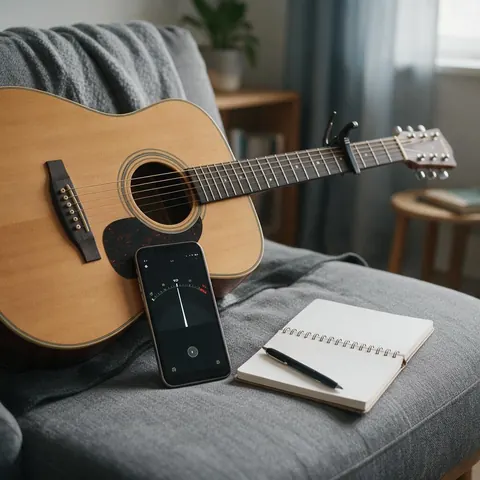
A musician could find the key and tempo of a song before learning it on guitar.
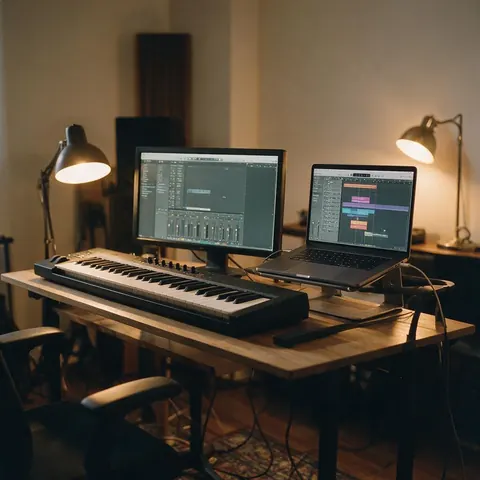
A producer could match a reference track's key and BPM, then make an original track to fit.
FAQ
10 questions
Load the audio file into the BPM key finder above. It estimates the tempo, key, Camelot code and relative key in your browser in a few seconds.
Link to this answerNo. The finder only reads an audio file on your device. Use a file you own or have the rights to use. For a song you can only stream, tap along with the tap tempo tool to get the BPM.
Link to this answerYes. MP3, WAV, M4A and OGG files usually work, up to 60 MB. Your browser decodes the file, so other formats may work too, depending on the browser.
Link to this answerUse the finder, or by ear: find the note that feels like 'home' (usually the last bass note), then check whether the song sounds major (bright) or minor (darker).
Link to this answerYes — it's free, needs no sign-up, and runs on your device.
Link to this answerNo. The analysis runs locally in your browser with Web Audio; the file never leaves your device.
Link to this answerMany grooves can be counted either way — trap and drill are often felt at half time. The finder shows both alternatives; use tap tempo to decide.
Link to this answerA DJ notation for keys on a wheel (1A–12B). Tracks with the same number, or one step away, usually mix harmonically.
Link to this answerIt's an estimate, and we haven't published an accuracy figure. Steady, drum-driven songs are most reliable; free-tempo, modal or key-changing music is harder for any detector. Check the BPM by tapping along and the key by ear before you rely on it.
Link to this answerTools listen to different parts of a song and use different methods. Ours reads up to 90 seconds from the middle. A half- or double-time answer, or the relative major or minor, is the most common difference, and both can be fair readings of the same track.
Link to this answerIn depth
What works, what to avoid, and how the pieces fit.
Two analyses run on a mono copy of up to 90 seconds from the middle of the track:
The finder works on files, not links:
The number is the position on the wheel. A is minor and B is major. Tracks with the same number, or one number away with the same letter, usually mix well:
Every automatic finder gives an estimate, and that includes this one. We haven't run a formal accuracy test, so we don't quote a percentage. Two kinds of near miss are common: a tempo at half or double the one you feel, and the relative major or minor of the true key, which uses the same notes.
Steady drums give the most reliable BPM. Rubato piano, live recordings and ambient music may have no single tempo. Songs that change key get one average result, and modal or atonal music gives a low confidence bar. For a DJ set or a release, check the result by ear.
Common reasons to check:
By the Kenerate AI teamLast updated and reviewed
We build and run the Kenerate Music Studio. Every demo on this page is a real output of the engine named on it, made from the prompt shown; engine facts were checked against the app's code.
Sources: MDN — OfflineAudioContext

Free to start. No watermark. Download every track.
Tried it? Tell us how it went