












Why a normal resize makes pictures blurry
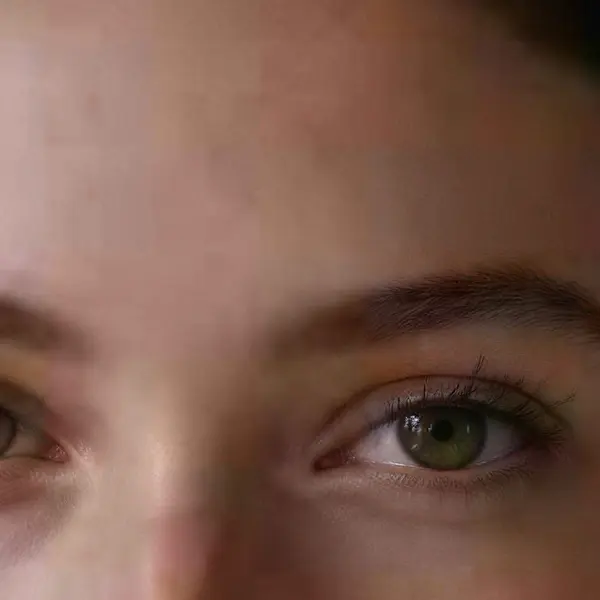
Classic resizing — nearest-neighbour, bilinear, bicubic (Keys, 1981) and Lanczos (Duchon, 1979) — creates each new pixel as a weighted average of the pixels around it [1][2]. No new fine detail is created, so when you enlarge, edges are simply spread across more pixels and the image looks soft. Nearest-neighbour keeps hard edges but turns curves into visible blocks; Lanczos is sharper than bicubic but can add halos (ringing) along edges [3].
There is also a hard limit: a sampled image only holds detail up to half its sampling rate (Shannon's sampling theorem) [4]. Many different sharp images shrink to the same small one, so any upscaler has to choose a plausible answer rather than recover the true one.
How AI super-resolution learned to add detail
SRCNN (Dong, Loy, He and Tang, ECCV 2014) is widely cited as the first deep-learning super-resolution network: one small convolutional network learns the whole mapping from low- to high-resolution [5]. SRGAN (Ledig et al., CVPR 2017) added a perceptual loss and an adversarial (GAN) loss and produced the first photo-realistic 4× results [6]; ESRGAN (Wang et al., 2018) improved it and won the PIRM2018 super-resolution challenge — while noting that GAN-hallucinated details can come with artefacts [7].
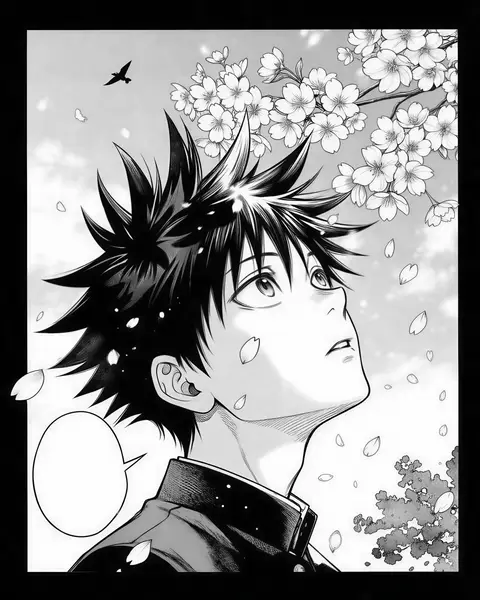
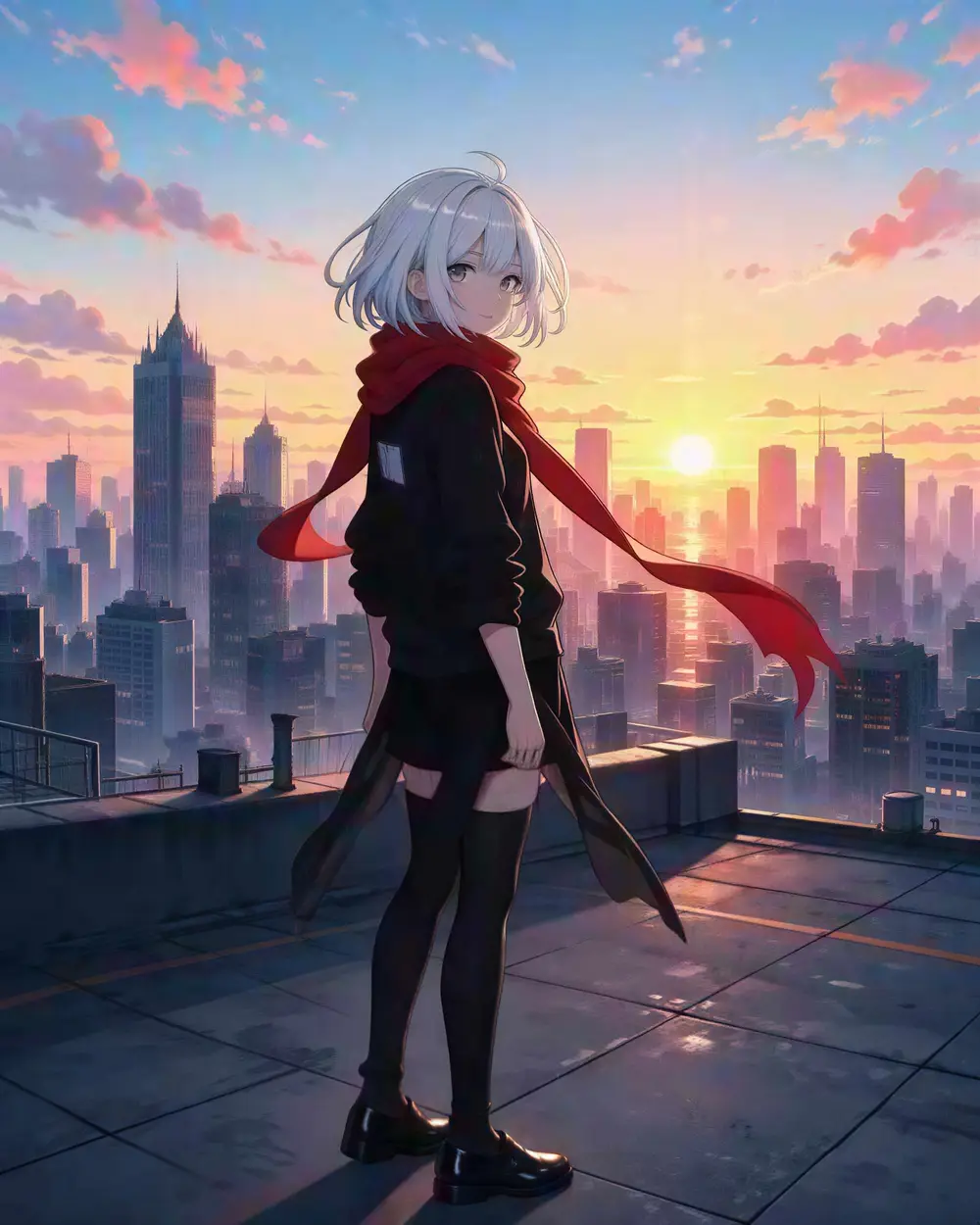
Real-ESRGAN (Wang, Xie, Dong and Shan, ICCV Workshops 2021) — the default engine in Kenerate's upscaler — was trained on synthetic “high-order” degradations: blur, noise, resizing and JPEG compression applied, then applied again, so it copes with messy real-world photos instead of clean lab images [8]. It is open source under the BSD-3-Clause licence and has a smaller model tuned for anime [9].
Faithful vs creative: the perception–distortion trade-off
Blau and Michaeli (CVPR 2018) proved that no restoration method can be both maximally faithful to the true pixels and maximally natural-looking — improving one eventually costs the other [10]. That is why Kenerate offers both kinds of engine.
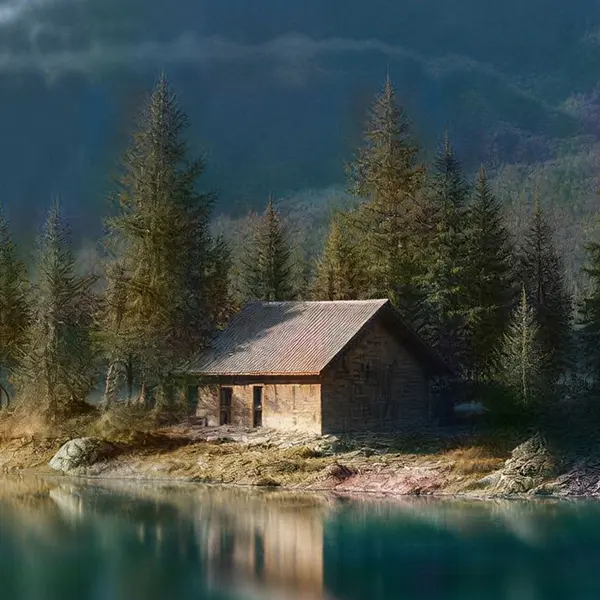
Faithful engines (Real-ESRGAN, Image Upscaler, Kenerate Upscale, Ultimate) stay close to the input. Creative engines are closer to diffusion upscalers such as Stability AI's SD x4 upscaler [11], StableSR [12] and SUPIR [13], which regenerate detail from a learned image prior; StableSR even exposes a single dial to balance quality and fidelity — the same idea as Clarity Pro's creativity slider.
Why upscaled faces and text need a second look
In June 2020 the PULSE face “depixelizer” (Menon et al., CVPR 2020) turned a pixelated photo of Barack Obama into a white man, because it searched a face generator for any face that matched the pixels — not the real person [14][15]. In 2024 a Washington State court excluded AI-“enhanced” video from a criminal trial, finding it showed what the model “thought should be shown” [16].
The lesson for everyday use: AI upscaling is excellent for making photos, products and artwork look better, but it is not evidence. Keep faithful engines for anything factual, compare faces and text at 100%, and keep your original file.