
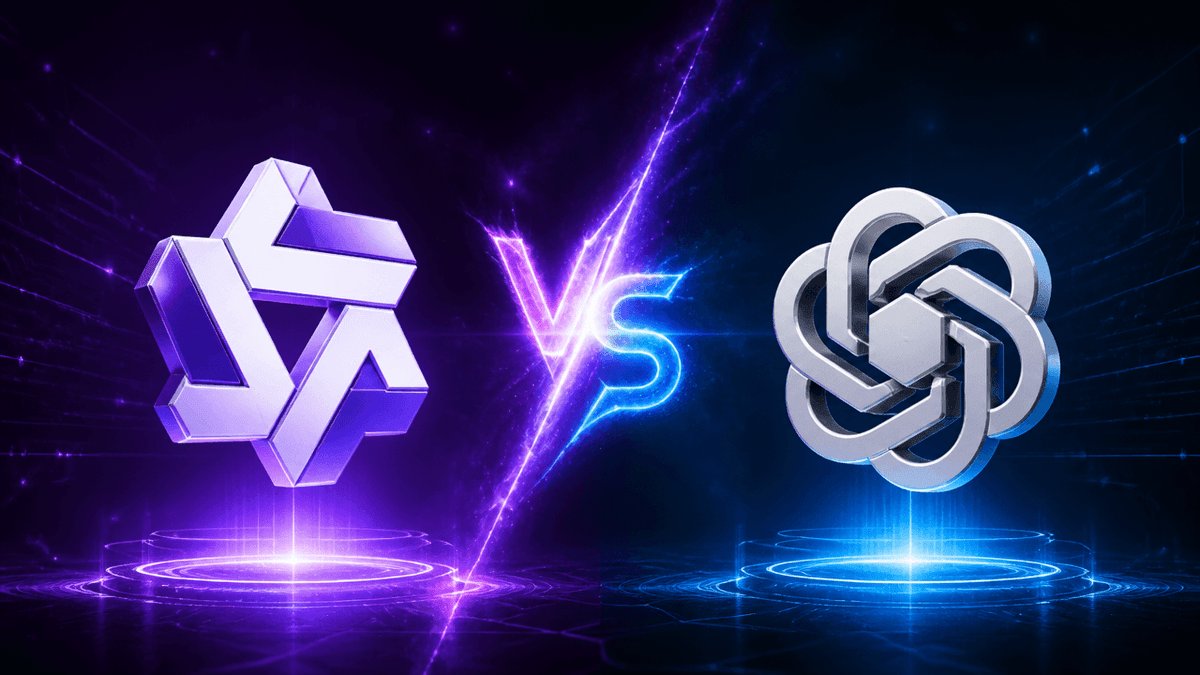
Qwen Image 3 and GPT Image 2 both launched within months of each other in 2026, and both are chasing the same hard problem: getting AI-generated text and layouts to actually look right instead of turning into scrambled gibberish. If you're choosing between them — or wondering whether you need either — the honest answer depends on what you're making: a dense infographic, a UI mockup, a product photo, or a social thumbnail.
A quick warning: neither model is a simple "pick one and done" choice. Qwen Image 3 shipped without published benchmarks, a model card, or open weights, so its headline claims are largely demo-driven. GPT Image 2's pricing is token-based and can swing from a few cents to over twenty cents per image depending on resolution and quality tier — easy to underestimate if you're generating in volume.
🎨 Try Both Styles Free Inside Kenerate AI
Why Text Rendering Is Suddenly the Whole Game
- Legible text used to be the weak point of every image model — logos, signage, and headlines routinely came out as scrambled characters. Both Qwen Image 3 and GPT Image 2 are built to fix exactly this.
- Prompt length now determines how much you can pack into one image. Qwen Image 3 accepts prompts up to 4,500 tokens, a jump from the roughly 1,000-token limit of its predecessor, letting one prompt describe a full page layout instead of just a subject and style.
- Resolution ceilings decide whether an image is print-ready or just social-ready. GPT Image 2 supports high-resolution output suitable for commercial use, while token-based billing means bigger, higher-quality images cost meaningfully more per generation.
- Access model matters as much as capability. Qwen Image 3 is accessible through Qwen Studio's web, iOS, Android, macOS, and Windows apps, plus Alibaba's API, while GPT Image 2 ships inside ChatGPT itself with a separate, metered API for developers.
- Neither model is free at real production volume. Free tiers exist to test the waters, not to run a content calendar — which is exactly where a flat one-time tool starts to matter.
Qwen Image 3: What It Actually Is
Alibaba's Qwen team released Qwen Image 3 on July 21, 2026, framing the release around three capabilities the company calls Rich Content, Authentic Details, and Deep Knowledge. In practice, that means the model is built for content that looks like a working document rather than isolated artwork — newspaper-style layouts, software UI mockups, technical charts, and multi-panel infographics generated in a single pass instead of stitched together from several images.
The headline numbers: prompts up to 4,500 tokens long, legible text down to roughly 10 pixels, and native rendering across 12 languages with over 20 fonts. Independent hands-on testing across 19 practical prompts found the model unusually stable on long, text-heavy instructions, especially where earlier models tended to garble small labels or invented characters.
The catch is transparency. Unlike the original Qwen Image, which launched under an open Apache 2.0 license with downloadable weights and a same-day technical report, Qwen Image 3 is closed and hosted-only — no model card, no benchmark score, no weights. Independent reviewers who tested it separately from the launch demos noted that general image quality and photorealism still trail GPT Image 2 and Nano Banana Pro; Qwen Image 3's edge is specifically in typography and layout density, not overall aesthetic polish.
GPT Image 2: What It Actually Is
OpenAI released GPT Image 2 inside ChatGPT on April 21, 2026, as the third-generation flagship image model following gpt-image-1 (April 2025) and gpt-image-1.5 (December 2025). It was also OpenAI's first attempt to fold reasoning capability into an image model, which shows up as stronger prompt adherence on complex, multi-element scenes and more consistent edits when you pass in a reference image.
On the independent Qwen-Image-Bench evaluation, which scores 18 text-to-image models across five pillars — quality, aesthetics, alignment, real-world fidelity, and creative generation — GPT Image 2 came out on top by a meaningful margin over the next tier, with the researchers noting it was the only model to lead on all five pillars simultaneously. That's a strong, board-based result rather than a single cherry-picked comparison. GPT Image 2 is also noted for neutral color balance with no yellow cast, which matters for brand-sensitive product photography.
Access is straightforward: it's available across ChatGPT's free, Plus, and higher tiers with different rate limits, and separately through OpenAI's API, billed per token rather than per subscription.
Qwen Image 3 vs GPT Image 2: Side-by-Side
| Qwen Image 3 | GPT Image 2 | |
|---|---|---|
| Released | July 21, 2026 | April 21, 2026 |
| Maker | Alibaba (Qwen team) | OpenAI |
| Max prompt length | ~4,500 tokens | Standard chat-length prompts |
| Text rendering | Down to ~10px, 12 languages | Strong multilingual text rendering |
| Best at | Dense layouts, documents, UI mockups | General image quality, photorealism, edits |
| Benchmarks published | None (closed release) | Leads Qwen-Image-Bench across all 5 pillars |
| Open weights | No (unlike Qwen Image 1.0) | No |
| Where to access | Qwen Chat, Qwen Studio (web/iOS/Android/macOS/Windows), Alibaba API | ChatGPT (all tiers), OpenAI API |
| API pricing | Not yet on public price list | ~$8/M input tokens, ~$30/M output tokens |
| Per-image cost (API, approx.) | Not yet published | ~$0.005–$0.21 depending on resolution/quality |
⚡ Compare Both Inside Kenerate AI — No Extra Sign-up
Pricing Breakdown
Qwen Image 3 is usable for free with rate limits through Qwen Chat and Qwen Studio. Heavier or commercial use routes through Alibaba's API, which had not published a fixed price list for version 3 at the time of writing — a real gap if you're trying to budget ahead of a launch.
GPT Image 2 pricing is more mapped out but genuinely confusing at first glance because it's token-based, not per-image:
- Image input: roughly $8 per million tokens (about $2/M for cached input)
- Image output: roughly $30 per million tokens
- Text input: roughly $5 per million tokens
- Real-world per-image cost, depending on resolution and quality tier, lands somewhere between about $0.005 (low quality, 1024×1024) and $0.21 (high quality, larger formats)
- On ChatGPT itself, free accounts get a handful of generations per day; paid tiers open up meaningfully higher limits but still cap out rather than being unlimited
Stack that against Kenerate AI's one-time $15 payment, which gives direct access to both model families (and 500+ others) without token math or a recurring bill, and the calculus for anyone generating regularly starts to favor the flat-fee route.
💳 See Kenerate AI's One-Time Pricing
How to Get the Most Out of Either Model
- Match the model to the task, not the hype. Use Qwen Image 3-style prompting for layouts, infographics, and text-heavy assets; use GPT Image 2-style prompting for iterative edits, photorealistic scenes, and general creative work.
- Front-load structure in your prompt. Describe headline placement, sections, and hierarchy explicitly — both models reward detailed, structured prompts over vague ones, especially Qwen Image 3 given its much larger prompt budget.
- Budget for resolution, not just volume. Higher resolution and quality tiers cost disproportionately more on token-billed APIs, so test at low quality before committing to high-res batches.
- Proofread every generated character. Even the best current text-rendering model still makes mistakes outside its comfort zone — treat generated labels, captions, and charts as drafts, not final copy, especially in non-Latin scripts.
- Keep a fallback model on hand. Given Qwen Image 3's lack of public benchmarks, don't rely on it alone for client-facing work until independent testing catches up — cross-check output quality against a second model before shipping.
What You Can Realistically Make for Free
On free tiers, you can reasonably prototype single images, test whether small text renders cleanly, and mock up one or two layout ideas before hitting rate limits. What you can't do is run a real content calendar — free access on both platforms is metered tightly enough (a handful of generations per day, in most cases) that anything beyond casual testing pushes you toward a paid plan or a per-image API bill.
Free vs. Paid: When to Upgrade
- You're generating daily or in batches rather than occasionally testing prompts.
- You need consistent, high-resolution output for client or commercial work.
- You're tired of token math and want a flat cost instead of a bill that scales with every image.
Between GPT Image 2's per-token API pricing and Qwen Image 3's still-unpublished API rates, most creators end up paying a recurring fee somewhere just to keep experimenting. Kenerate AI flips that model: one-time $15 payment for direct access to the leading image models, instead of stacking multiple $20–30/month subscriptions across providers.
🚀 Start Creating on Kenerate AI
Frequently Asked Questions
Is Qwen Image 3 free to use? Qwen Image 3 is accessible through Qwen Chat and Qwen Studio, which offer free access with usage limits; heavier or commercial use typically requires the Alibaba API, which had not published version-3 pricing at the time of writing.
Is GPT Image 2 available to free ChatGPT users? Yes, but free accounts get a tightly limited number of generations per day — enough to test the model, not to run a production workflow.
Which model is better for text-heavy images? Qwen Image 3 is purpose-built for dense, text-heavy layouts like documents and UI mockups, and independent 19-test hands-on comparisons found it genuinely competitive with GPT Image 2 on typography specifically. For overall image quality and photorealism, GPT Image 2 still leads.
Does Qwen Image 3 have open weights like earlier versions? No — unlike the first Qwen Image release, which shipped under an open Apache 2.0 license, Qwen Image 3 shipped without open weights, a model card, or published benchmarks, so its capabilities rest mainly on demo examples and early hands-on testing so far.
How does GPT Image 2 compare to older OpenAI image models? GPT Image 2 is the third generation after gpt-image-1 and gpt-image-1.5, and on the independent Qwen-Image-Bench evaluation it scored highest overall among 18 tested models, leading across all five measured pillars rather than trading off strengths and weaknesses.
What's the cheapest way to try both models? Rather than paying separately for an OpenAI API key and an Alibaba subscription, a single Kenerate AI plan gives access to both model families and others through one unified interface, without needing to track token pricing across two separate providers.