

Seedance, Kling, Veo, Runway and Wan are the five AI video model families most creators compare in 2026, and none of them wins every spec. Seedance 2.5 and Wan 3.0 make the longest single takes (up to 30 seconds), Kling 3.0 and Veo 3.1 reach 4K, Veo 3.1 generates sound on every clip, and Runway Gen-4.5 pairs strong motion with the most production-oriented toolset around it. This is the spec-by-spec AI video model comparison for 2026, built only from the makers' own documentation.
If you want a faster "which one do I use for my job" answer, jump to our Seedance vs Kling vs Veo vs Wan vs Runway decision guide. This page is the technical reference behind it.
Specs at a glance: Seedance vs Kling vs Veo vs Runway vs Wan
The table compares the current flagship of each family, plus Alibaba's open-weight Wan 2.2 because many creators still run it locally. "Max length" means one generation, before any extension feature.
| Model (maker) | Max length per generation | Resolution | Native audio | Inputs | Standout strength |
|---|---|---|---|---|---|
| Seedance 2.5 (ByteDance) | 30 s, plus multi-round extension | Up to 4K on Dreamina | Yes, generated together with the picture | Text plus up to 30 images, 10 videos, 10 audio clips | One-take storytelling, heavy referencing, timestamp editing |
| Kling 3.0 (Kuaishou) | 15 s | Native 4K | Yes, with character lip-sync | Text, image, character references, keyframes | Multi-shot sequences, multi-character dialogue, on-screen text |
| Veo 3.1 (Google DeepMind) | 4, 6 or 8 s; extend by 7 s up to 20 times | 720p, 1080p or 4K (1080p/4K at 8 s) | Always on | Text, image, up to 3 reference images, first and last frame | Prompted sound design, frame-to-frame control, 9:16 vertical |
| Runway Gen-4.5 (Runway) | Short single clips | HD, with HDR and ProRes masters via Runway's pipeline | Not part of the model | Text or image | Motion quality, pro post-production workflow, Aleph 2.0 editing |
| Wan 3.0 (Alibaba) | 2 to 30 s in one pass | 480p, 720p, 1080p | Yes (Alibaba says audio is still improving) | Text, image, audio, video and documents | Long clips, video built from slides, PDFs and docs |
| Wan 2.2 (Alibaba, open weights) | About 5 s per clip | 480p, 720p (24 fps on the 5B model) | No (separate speech-to-video variant) | Text or image | Runs on your own GPU, fine-tunable |
Two caveats. First, every maker ships several tiers (Veo 3.1 Fast and Lite, Seedance 2.0 Fast and Mini, Wan 3.0 Prime), and each tier has its own limits. Second, third-party hosts often expose fewer settings than the maker's own app, so a spec here is the ceiling, not a promise on every platform.
How this comparison was built
Every number above comes from an official source: Google's Veo 3.1 Gemini API documentation, ByteDance Seed's Seedance 2.5 announcement, Kuaishou's Kling Video 3.0 page, Runway's Gen-4.5 research post and API model list, and Alibaba Cloud's Wan3.0 launch post. Where a maker doesn't publish a figure, the table says so instead of guessing.
There are no invented scores here. Quality is subjective and shifts with every prompt, so the sections below describe what each model is built to do and where the makers themselves say it still struggles.
Seedance 2.0 and 2.5 (ByteDance)
Seedance 2.0 introduced ByteDance's unified audio-video joint generation architecture: one model that takes text, images, audio and video as inputs and returns video with sound. Seedance 2.5, released July 31, 2026, builds on it in three ways.
- Length. Single-pass generation goes from 15 seconds to 30 seconds, and multi-round extension keeps characters and environments consistent across rounds.
- References. One request can carry up to 30 images, 10 video clips and 10 audio clips, including clay renders, motion references and style references.
- Editing. Timestamp-level edits, green-screen edits and camera-perspective edits let you fix one moment without regenerating the whole shot.
ByteDance's own page says the model still has room to improve on the physical plausibility of complex motion and on scenes where several subjects interact. Plan for that: crowd scenes, fights and tangled hand interactions are where retakes happen.
Best for: narrative one-takes, branded content where you must match existing assets, and anyone who works from mood boards. See how it runs on the Seedance 2.5 page.
Kling 3.0 (Kuaishou)
Kling Video 3.0 generates up to 15 seconds in a single run, supports native 4K, and produces audio with character-level lip-sync in the same pass. Its headline feature is multi-shot generation: one prompt can describe a short sequence of cuts while characters and objects stay consistent across them.
What stands out on the spec sheet:
- Dialogue between several characters. You can assign lines to different people in the same scene, with matching voices and mouth movement.
- Multilingual speech and accents, which matters for localized ads.
- Native text rendering, useful when a product name or sign has to read correctly.
- Motion control with keyframes and character references for repeatable characters.
Best for: dialogue scenes, short multi-shot stories and 4K deliverables. See the Kling AI video generator page for how it runs on Kenerate.
Veo 3.1 (Google DeepMind)
Veo 3.1 is the most precisely documented model in this group. Clips are 4, 6 or 8 seconds; 1080p and 4K require the 8-second length. Audio is always on, and prompts can direct dialogue, sound effects and ambient noise. You can supply up to three reference images for style and content, or a first frame and a last frame so the model interpolates the motion between them.
Length is handled by extension: each pass adds 7 seconds, up to 20 times, at 720p. Veo 3.1 Fast trades some quality for speed, and Veo 3.1 Lite tops out at 1080p and cannot extend. In January 2026 Google added native vertical 9:16 output and Ingredients to Video improvements for character consistency.
Best for: shots where sound matters as much as picture, precise start-to-end camera moves, and vertical social content. More on the Google Veo 3.1 page.
Runway Gen-4.5 and Aleph 2.0
Runway announced Gen-4.5 on December 1, 2025, focusing on motion quality, prompt adherence and visual fidelity. At launch it ranked first on the Artificial Analysis text-to-video leaderboard, according to Runway. Runway lists its own limitations too: causal reasoning, object permanence and a tendency for actions to succeed when they shouldn't.
According to Runway's API model list, Gen-4.5 takes text or an image and returns video. Runway doesn't present audio as a Gen-4.5 feature. Its strength is the workflow around the model:
- Aleph 2.0 edits existing video with text or image guidance (video-to-video).
- HDR output graded into BT.2020, 12-bit masters and ACES compatibility for post houses.
- ProRes and PNG sequences for editorial pipelines.
- Act-Two for performance-driven character animation.
Runway has also become a multi-model platform: its API now offers Seedance 2.5, Veo 3.1, WAN 3.0, MiniMax H3 and others next to its own models. That's a useful sign that even Runway doesn't expect a single model to cover every shot.
Best for: teams finishing in professional editing and color pipelines, and anyone who needs to restyle or fix existing footage. If you're weighing options, see our Runway alternative page.
Wan 3.0 and the open Wan 2.2 (Alibaba)
Wan3.0, released in August 2026, generates up to 30 seconds in one pass at 480p, 720p or 1080p, with smart duration suggestions and video extension. Its most unusual feature is input range: besides text, images, audio and video, it accepts documents such as slides, spreadsheets, PDFs and text files, and builds a video from them. Alibaba says audio texture and on-screen text accuracy are still improving.
Wan 2.2 is the open-weight branch. Its 5B text-and-image-to-video model makes 720p clips at 24 fps on a single consumer GPU with 24 GB of memory; the larger 14B models want far more. If you need to run video generation on your own hardware or fine-tune it, Wan 2.2 is the practical choice in this group. Check the license on the repository before commercial use.
Best for: long explainer-style clips, turning a deck or document into video, and local or custom pipelines. See the Wan AI video generator page.
Head-to-head: who leads on each spec
| Spec | Leader(s) | Notes |
|---|---|---|
| Longest single generation | Seedance 2.5, Wan 3.0 (30 s) | Veo 3.1 reaches longer totals only through 7-second extensions |
| Highest resolution | Kling 3.0, Veo 3.1 (4K) | Seedance 2.5 is listed at up to 4K on Dreamina |
| Sound on every clip | Veo 3.1 | Kling 3.0 and Seedance also generate audio natively |
| Lip-synced dialogue | Kling 3.0 | Multiple speakers in one scene |
| Most reference inputs | Seedance 2.5 | Up to 50 references per request |
| Editing existing video | Runway Aleph 2.0, Seedance 2.5 | Different approaches: video-to-video vs timestamp edits |
| Run on your own GPU | Wan 2.2 | Open weights, 720p |
Prompts to run your own side-by-side test
The fairest way to compare these models is to send the exact same prompt to each and judge the results for your use case. Here are three test prompts that stress different strengths.
AI Prompt RecipeFlux.1 Pro16:9“A barista in a sunlit cafe pours steamed milk into a latte, forming a leaf pattern. Slow push-in from medium shot to close-up. Soft morning light, shallow depth of field. Sound: espresso machine hiss, quiet cafe chatter, cup set on saucer.”
AI Prompt RecipeFlux.1 Pro16:9“Two friends sit on a rooftop at dusk. The first says, "We actually made it." The second laughs and replies, "Told you we would." City lights flicker on behind them. Handheld camera, warm golden hour grade, natural dialogue and lip-sync.”
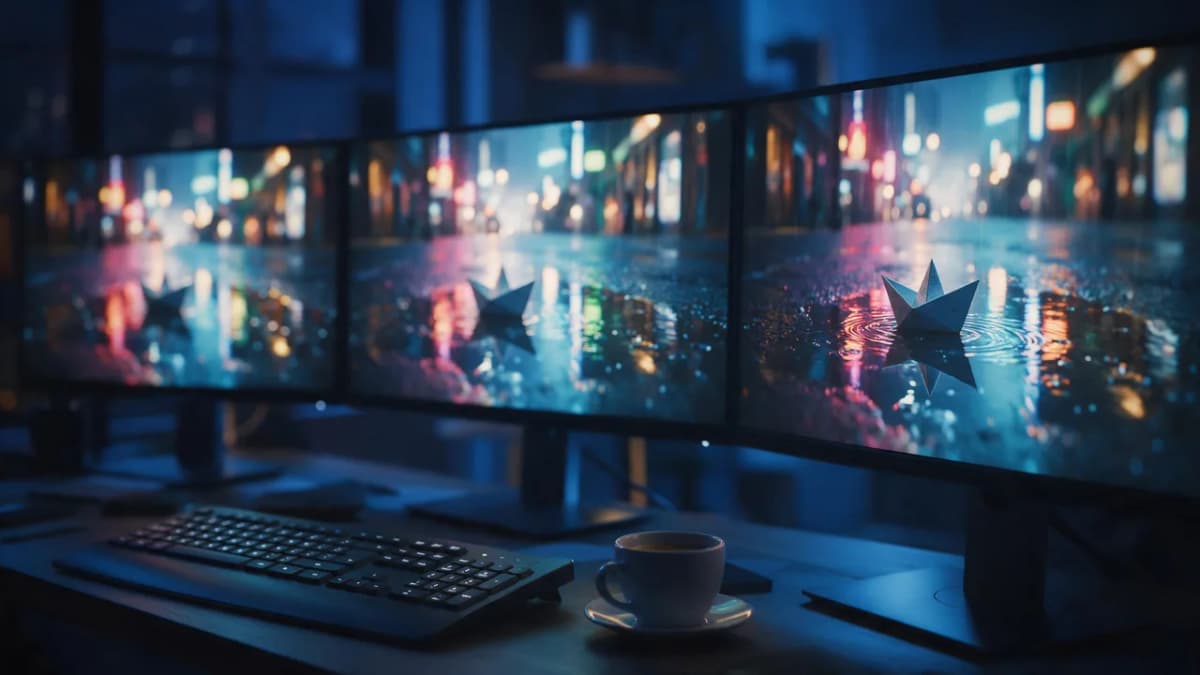
AI Prompt RecipeFlux.1 Pro16:9“A paper boat drifts down a rain-soaked city gutter, camera tracking low beside it. Reflections of neon signs ripple in the water. Cut to an overhead shot as the boat reaches a puddle, then a close-up as a raindrop lands on its sail.”
The first tests texture, liquid physics and sound design. The second tests dialogue and lip-sync. The third tests multi-shot consistency and camera tracking.
Compare models in the Video Studio
What happened to Sora?
OpenAI announced in March 2026 that it was shutting down Sora. According to OpenAI's help center, the web and app experiences closed on April 26, 2026, and the Sora API was scheduled to close on September 24, 2026. If an older comparison still lists Sora 2 as an option, treat that part as out of date.
Running this comparison on Kenerate
You can test four of the five families from one account on Kenerate: Seedance 2.0 and 2.5, Kling v3 Pro and 4K, Veo 3.1, and Wan 3.0 and Wan 3 Prime, plus Kenerate's own Ken 1 (1080p, up to 15 seconds, text or image input), MiniMax H3, Gemini Omni Flash and more. Runway's models are not on Kenerate, so test Gen-4.5 and Aleph in Runway's own app.
New accounts get 25 free credits on sign-up, and credits never expire, so you can run the three prompts above across several models before deciding. Start with text to video or image to video, and see pricing when you need more.
Bottom line
There's no single winner in Seedance vs Kling vs Veo vs Runway vs Wan. Pick by the spec that matters for the shot: Seedance 2.5 or Wan 3.0 for 30-second takes, Kling 3.0 for 4K dialogue and multi-shot scenes, Veo 3.1 for sound and frame control, Runway Gen-4.5 with Aleph for professional finishing, and Wan 2.2 if you need to run it yourself. Then test with the same prompt before you commit.