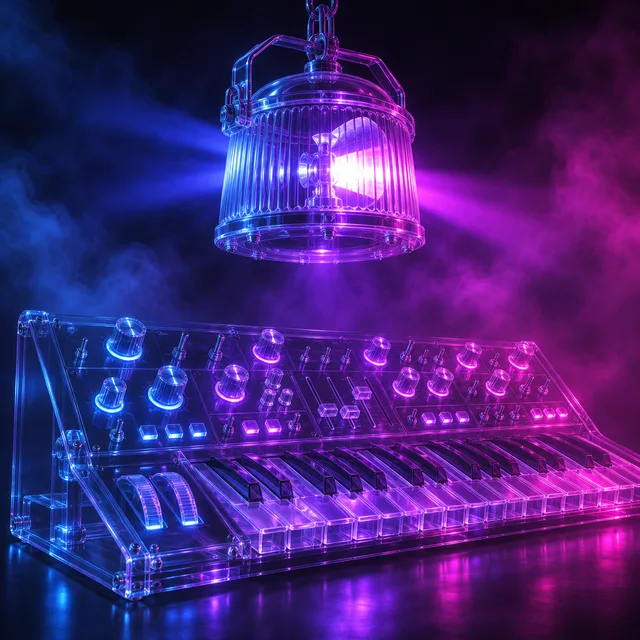




TechnoInstrumental130 BPM
Night Shift
Made with Ken Music 1.5 · Made for this page · 3:01
—
PromptDriving peak-time techno instrumental at 130 bpm, punchy four-on-the-floor kick, rolling offbeat bass, open hi-hats, hypnotic synth stabs


130 beats in 60 seconds · 461.5 ms per beat
130 beats per minute is a driving, high-energy tempo: the top of house, and squarely in techno, trance and UK garage. Start the metronome, tap along with a song, download a 130 BPM click track, or make an original track at 130.
130
BPM
Updated by the Kenerate AI team
On this page
Quick answer
130 BPM means 130 beats in 60 seconds, or one beat about every 462 ms (0.462 s). It's a fast tempo inside the allegro range, at the top of house and in the usual ranges for techno, trance, UK garage and rock. Start the metronome above, tap along with a song to check it, or make a 130 BPM track with Ken Music in Kenerate AI's Music Studio.
Listen first
Real AI generations asked for tempos near 130. The first was made for this page; the last is 10 BPM slower for comparison. Check any track with the BPM & key finder.
Made with Ken Music 1.5 · Made for this page · 3:01
PromptDriving peak-time techno instrumental at 130 bpm, punchy four-on-the-floor kick, rolling offbeat bass, open hi-hats, hypnotic synth stabs
Made with ElevenLabs Music v2.5 · Same tempo, another engine
PromptHypnotic minimal techno instrumental, rumbling kick, metallic percussion, evolving acid line, warehouse vibe, 130 bpm
Made with Ken Music 1.5 · Swing near 130
PromptJazz piano trio, swinging piano solo, upright bass, brushed drums, late-night club, 132 bpm
Made with MiniMax Music 3.0 · 10 BPM slower
PromptGroovy house instrumental at exactly 120 bpm, four-on-the-floor kick, warm bassline, piano chords, steady and danceable
How to
Step 1
The metronome starts at 130 BPM.
Step 2
4/4 for techno, trance and house. 8th-note clicks land 230.8 ms apart, so only turn them on if you need the grid.
Step 3
Press Tap tempo on each beat and the metronome moves to the tempo you tapped. A reading near 65 means you tapped every other beat.
Step 4
A WAV of 30 seconds to 3 minutes.
See it in the app

Open Music Studio and pick a song from a prompt, a song from your lyrics, or an instrumental.
Prompt & lyrics to song, instrumentals, models, your tracks & chat
Chapters
Checked 12 November 2026
Typical ranges from published tempo guides. Sources differ at the edges, and any single song can sit outside its genre's range.
| Typical range | How 130 feels here | |
|---|---|---|
| Techno | 120–140 BPM (Ableton), 125–140 (Mubert), 120–160 (Musical U) | Inside every range: driving |
| Trance | 130–140 BPM (Mubert), 126–140 (Digital DJ Pool), 130–145 (Musical U) | The bottom of most ranges |
| UK garage | 124–132 BPM (Digital DJ Pool), 130–135 (Musical U) | Inside both ranges |
| House | 115–130 BPM (Ableton), 118–128 (Mubert), 120–130 (Digital DJ Pool) | The top of the range, or just above it |
| Tech house | 122–128 BPM (Digital DJ Pool), 120–135 (Musical U) | Fast for tech house |
| Rock | 110–140 BPM (Musical U) | Upper-middle: energetic |
| Pop | 100–130 BPM (Mubert, Musical U) | The top of the range |
| Trap | 130–170 BPM (Mubert), 130–150 (Digital DJ Pool) | The bottom, usually felt at half-time |
Ranges are conventions, not rules. Most styles here run at the full speed; trap is the exception, felt at 65.
Sources: Ableton Learning Music — Tempo and genre · Mubert — BPM tapper and genre tempos · Musical U — typical BPM by genre · Digital DJ Pool — DJ BPM guide · Wikipedia — Tempo · MedlinePlus — Give your heart a workout (target heart rate) · MedlinePlus — Pulse (normal resting heart rate) · Tudor-Locke et al. (2018), walking cadence as an estimate of intensity — BJSM · Kenerate Music Studio — engine list and modes
Engines
Facts from the app's engine list.

Kenerate
Best for
Default engine: full songs with vocals in any language; can take an image as inspiration
MiniMax
Best for
Follows [Verse]/[Chorus] section tags closely
ElevenLabs
Best for
Set the exact duration; clean studio mix
Mureka
Best for
Writes its own lyrics from a prompt; style chips; MP3/WAV/FLAC
Prompt recipe
Each opens the Music Studio with the tempo in the prompt.
Four-on-the-floor
Drum beat at 130 bpm, kick on every beat, clap on 2 and 4, open hi-hats on the off-beats, no melody
Techno
Driving techno at 130 bpm, punchy kick, rolling offbeat bass, hypnotic synth stabs
Trance
Uplifting trance at 130 bpm, rolling bass, supersaw chords, soaring lead, big breakdown
UK garage
UK garage at 130 bpm, shuffled 2-step drums, deep bass, chopped vocal samples
Rock
Energetic rock song at 130 bpm, driving drums, distorted guitars, anthemic chorus
Dance-pop
Dance-pop song at 130 bpm, four-on-the-floor beat, bright synths, catchy female vocals
Tempo
The classical terms, as listed on Wikipedia. It calls these very rough approximations, so treat them as guides.
108–120 BPM · Moderate; 110 BPM sits here
120–156 BPM · Fast and bright; 130 sits here
156–176 BPM · Lively and fast; 160 BPM sits here
168–200 BPM · Very fast
Tips
Small tips.
Build up to it: practise at 110 or 120, then raise the tempo a few BPM at a time.
Lock the kick to every click; at 130 the four-on-the-floor carries everything.
Arrange in 8- and 16-bar blocks; 16 bars last about 29.5 seconds at 130.
A house track at 124–128 can be nudged to 130 with a small pitch change.
Press Tap tempo along with a song to confirm it's really 130.
FAQ
10 questions
130 beats in 60 seconds. Each beat lasts about 461.5 ms (0.462 seconds), which is about 2.17 beats per second, and a bar of 4/4 lasts about 1.85 seconds.
Link to this answerYes. It falls inside the allegro range of 120–156 BPM, and at the very top of the 100–130 BPM that guides list for pop. For dance music it's mid-to-high energy: faster than most house, slower than drum & bass.
Link to this answerOn this page. Press Start above for a free 130 BPM metronome with accents, 8th-note clicks and Tap tempo, or press WAV to download a click track of 30 seconds to 3 minutes. No account needed. The full metronome covers 40–240 BPM.
Link to this answerFor dance music, put the kick on every beat (461.5 ms apart), a clap or snare on 2 and 4, and open hi-hats on the off-beats. For rock, put the kick on 1 and 3 and the snare on 2 and 4. Count along with the metronome above, or ask the Music Studio for a drum beat at 130 bpm.
Link to this answerTechno, trance and UK garage all have typical ranges that include 130, and it's the top of house and pop. Rock reaches it too (Musical U lists 110–140), and trap starts here, though trap is usually felt at half-time.
Link to this answerPlenty of techno, trance and rock tracks sit near 130, but published tempos for one song often disagree, and the same track can be listed at 130 or 65 depending on how the beat is counted. To check a song, tap along with Tap tempo above or load the file into the BPM & key finder, which shows half- and double-time options.
Link to this answerBoth guides overlap here. Ableton puts house at 115–130 and techno at 120–140, and Digital DJ Pool ends house at 130, so 130 is the top of house and the middle of techno. Style decides it more than tempo: the sounds, the bass line and the drums.
Link to this answer130 BPM is about 8% faster: a beat every 461.5 ms instead of 500 ms, and a 4/4 bar lasts 1.85 s instead of 2 s. 120 is the steady pulse of house; 130 pushes into techno and trance energy.
Link to this answerLoad it into the free BPM changer: it detects the original tempo, you set 130, and it time-stretches the track without changing the pitch. It works from 50% to 150% of the original, so it can reach 130 from anything between about 87 and 260 BPM. A 120 BPM song goes to 130 at about 108% speed.
Link to this answerDuring exercise it can be: MedlinePlus puts the target exercise range at 50% to 85% of your maximum, roughly 220 minus your age, so 130 is 65% of maximum at 20, about 72% at 40 and about 81% at 60. At rest it's above the normal adult range of 60 to 100, so speak to a doctor. This page is about musical tempo, not medical advice.
Link to this answerIn depth
What works, what to avoid, and how the pieces fit.
130 is the hand-off point between house and the faster club styles. House guides end at 128–135 (Mubert 118–128, Ableton 115–130, Digital DJ Pool 120–130, Musical U 118–135), while techno, trance and UK garage ranges all include 130 [1][2][3][4]. Digital DJ Pool's set arc puts 130 in the peak band of 128–140, after a build through 120–128 [4].
Unlike 140, where dubstep and trap feel like 70, most styles at 130 are played at the full speed: a kick on every beat, 461.5 ms apart.
Two 4/4 patterns to practise with the click:
A beat lasts 500 ms at 120, 461.5 ms at 130 and 428.6 ms at 140. In feel, 120 is house, 130 is driving techno or trance, and 140 splits: trance and fast techno at full speed, dubstep and trap at half-time [1][4]. Play the 120 BPM comparison track above, then this page's techno demos, to hear the extra push.
Time-stretch it: load the track into the BPM changer, read the detected tempo, set 130 and preview. The pitch stays put, and the file never leaves your browser. The tool works from 50% to 150% of the original tempo, so it can reach 130 from anything between about 87 and 260 BPM, and the closer the song already is to 130, the cleaner the result.
Open the Music Studio, write '130 bpm' in the prompt with a style and instruments, and Ken Music 1.5 returns a track of up to about 3 minutes for 30 credits. The Studio has no tempo dial: the tempo in a prompt is a direction for the engine rather than a locked click, so check the result with the BPM & key finder if you need exactly 130. The first techno demo above was made this way for this page.
One step per beat at 130 BPM is 130 steps a minute, well above the roughly 100 steps a minute that a 2018 study uses as a marker of moderate-intensity walking [7].
As a heart rate, MedlinePlus gives a target exercise range of 50% to 85% of your maximum, roughly 220 minus your age, with 70% to 85% counting as vigorous [5]. By that estimate, 130 is 65% of maximum at age 20, about 72% at 40 and about 81% at 60. At rest, a normal adult rate is 60 to 100 [6]. Ask a doctor about your own heart.
By the Kenerate AI teamLast updated and reviewed
We build and run the Kenerate Music Studio. Every demo on this page is a real output of the engine named on it, made from the prompt shown; engine facts were checked against the app's code.
Sources: Ableton Learning Music — Tempo and genre · Mubert — BPM tapper and genre tempos · Musical U — typical BPM by genre · Digital DJ Pool — DJ BPM guide · Wikipedia — Tempo · MedlinePlus — Give your heart a workout (target heart rate) · MedlinePlus — Pulse (normal resting heart rate) · Tudor-Locke et al. (2018), walking cadence as an estimate of intensity — BJSM · Kenerate Music Studio — engine list and modes

Free to start. No watermark. Download every track.
Tried it? Tell us how it went