

Tripo P2 · released 21 Sep 2026
Tripo AI P2 and H3.1 in one studio
Tripo's two current engines: P2 for clean, native-quad game assets and H3.1 — the studio's default — for high-detail meshes and four-view input. Run them next to Meshy, Rodin, Hunyuan and GPT-6 Astra.




- Tripo P2 + Tripo H3.1
- Native quads (P2)
- Front/left/back/right views (H3.1)
- paid plans & credit packs
Updated by the Kenerate AI team
Made with Kenerate



On this page
Quick answer
Updated
What is Tripo AI?
Tripo is an AI 3D generator from the company Tripo AI (founded by VAST). Kenerate AI's 3D Studio runs two of its engines: Tripo P2, released 21 September 2026 for native quad meshes in production pipelines, and Tripo H3.1, a high-detail engine from early 2026 that takes text, one photo or multiple views. Both produce PBR-textured models.
Key facts
- Engines here
- Tripo P2 · Tripo H3.1 (studio default)
- Released
- P2: 21 Sep 2026 · H3.1: early 2026 (API snapshot 11 Feb 2026)
- Inputs
- Text · 1 photo · H3.1 multi-view: front, left (+ back, right)
- Mesh
- P2: native quads ≤25k or triangles ≤50k · H3.1: high detail, optional quad
- Textures
- PBR; P2 tiers fast → extreme; H3.1 standard / detailed
- Files
- GLB (both) · FBX (P2)
Start from a picture
Objects for Tripo
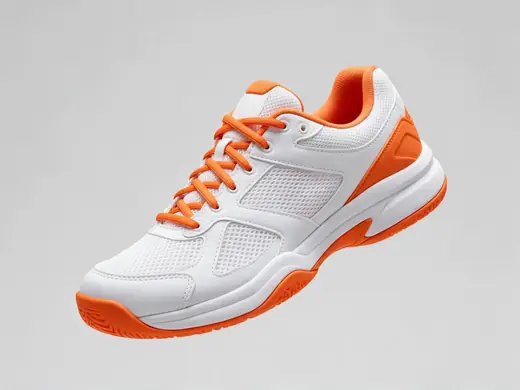
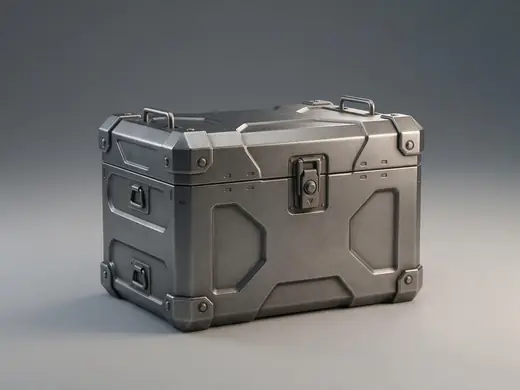
Products and game props — the kind of photo Tripo H3.1 and P2 turn into models.
Reference images made with Seedream 5.0 Pro. “To 3D” opens Image to 3D in the 3D Studio with that picture.
Why Kenerate
Two Tripos, two jobs
H3.1 goes for detail (our test models passed a million triangles), P2 for light, clean game meshes (a few thousand).

Tripo P2: native quads
P2 is pitched as generating quad topology directly, with edge flow and density where detail is — instead of making triangles and retopologising later.
Try it
Tripo H3.1: maximum detail
Dense geometry and detailed textures from text, one photo or up to four named views — the studio's default engine.
Try it
Also
What else it does
Clean, relightable colour
On P2, remove baked light for flat colour that relights properly in games and renderers.
Real-world scale
Optionally size the model in metres — handy for AR and printing.
Versions
Tripo P2 vs Tripo H3.1
Same maker, different goals.
Tripo P2
Released 21 Sep 2026. Native quad or triangle meshes at a face budget, texture tiers up to Extreme, FBX output.
Tripo H3.1
Early 2026. High-detail geometry and textures, four-view input, optional quad remesh. The studio default.
Engines
Nine engines in one 3D Studio
Pick per job — draft fast, then rebuild your favourite on a stronger engine.
- This page
Tripo
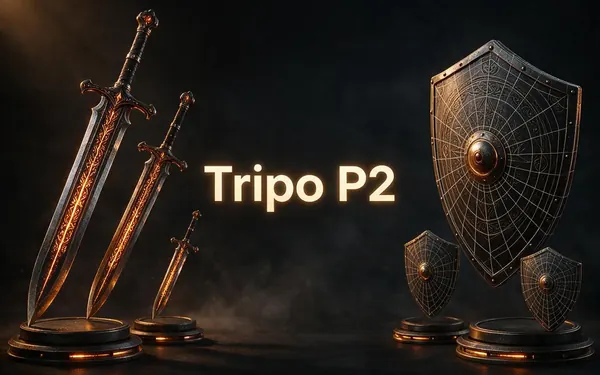
Tripo P2
- Inputs
- Text · Photo
- Files
- GLB, FBX
- Typical time
- about 3–4 min
Crisp, game-ready meshes with pro texture tiers up to Extreme and clean quad remeshing.
Open Tripo P2 - This page
Tripo
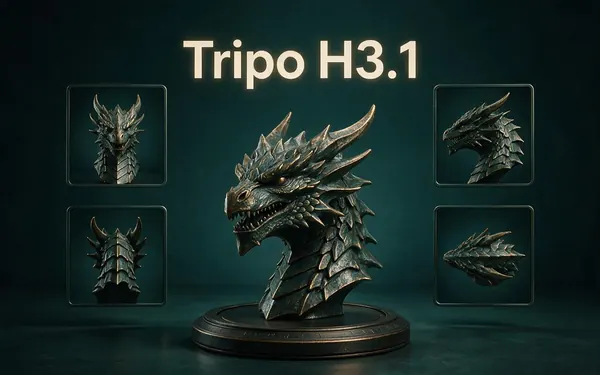
Tripo H3.1
- Inputs
- Text · Photo · Multi-view (up to 4 views)
- Files
- GLB
- Typical time
- about 4–5 min
High-quality meshes, with detailed geometry and a four-view mode for exact shapes.
Open Tripo H3.1 
Meshy
Meshy 7.1
- Inputs
- Text · Photo · Multi-view (up to 4 views)
- Files
- GLB, FBX, OBJ, USDZ
- Typical time
- about 3–4 min
Production assets with the finest Meshy geometry (2K / 4K), smart topology, rigging and animation.
Open Meshy 7.1
Meshy
Meshy 7
- Inputs
- Text · Photo · Multi-view (up to 4 views)
- Files
- GLB, FBX, OBJ, USDZ
- Typical time
- about 3–4 min
Detailed game and product assets, with an Ultra detail switch, low-poly mode and auto-rigging.
Open Meshy 7
Meshy
Meshy 6
- Inputs
- Text · Photo
- Files
- GLB, FBX, OBJ, USDZ
- Typical time
- about 3–4 min
Reliable textured meshes with a polygon budget you control — the engine 3D Studio started on.
Open Meshy 6
OpenAI
GPT-6 Astra
- Inputs
- Text · Photo · Multi-view (up to 10 views)
- Files
- GLB
- Typical time
- about 5–6 min
OpenAI's general GPT-6 Astra model run as a 3D job — follows long, detailed briefs and up to 10 reference photos, returns a GLB with PBR textures at real-world size. The slowest engine.
Open GPT-6 Astra
All models (9)
Hyper3D
Rodin 2.5
- Inputs
- Text · Photo · Multi-view (up to 5 views)
- Files
- GLB, FBX, OBJ, USDZ, STL
- Typical time
- about 2–3 min
Studio-grade meshes from 2K to 500K faces, quad or triangle, with a HighPack for 4K textures.
Open Rodin 2.5
Hyper3D
Rodin 2
- Inputs
- Text · Photo · Multi-view (up to 5 views)
- Files
- GLB, FBX, OBJ, USDZ, STL
- Typical time
- about 2–3 min
Clean, detailed meshes — the first photo drives the materials.
Open Rodin 2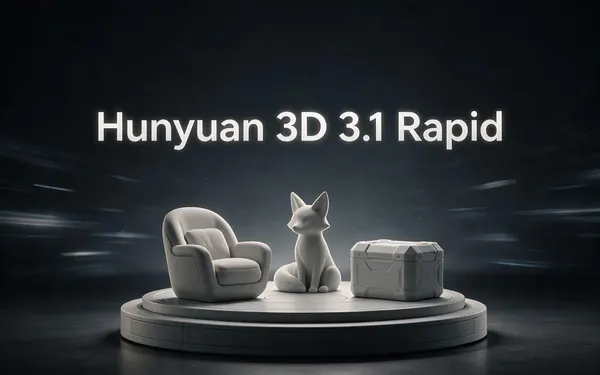
Tencent
Hunyuan 3D 3.1 Rapid
- Inputs
- Text · Photo
- Files
- GLB (untextured)
- Typical time
- about 1 min
The fastest geometry — an untextured (clay) GLB for quick blockouts, drafts and ideas.
Open Hunyuan 3D 3.1 Rapid
Typical times are the studio’s own estimates; real runs vary with load and settings. Formats are what each engine returns — GLB previews in the browser, other formats download.
How it works
How a Tripo job runs
In the 3D Studio.
Input
Prompt (up to 1,024 characters), one photo, or named views on H3.1.
Geometry
P2 builds a budgeted quad or triangle mesh; H3.1 builds dense, detailed geometry.
Texture
PBR textures at your quality tier (P2 can also remove baked light).
Deliver
GLB (and FBX on P2) in your gallery.
How to
How to use the Tripo AI 3D Generator
- Time needed
- Steps
- 4 steps
Step 1
Open 3D Studio
Pick Text to 3D, Image to 3D or Multi-view.
Step 2
Pick Tripo
Choose Tripo H3.1 for detail or Tripo P2 for clean quads.
Step 3
Set options
Texture quality, PBR, quad, face limit, real-world scale.
Step 4
Generate and download
Inspect and download GLB or FBX.
Watch the tour · 1:48
Text, photo or multi-view to a textured GLB, nine engines, the viewer & lighting, compare engines, gallery, download & chat
Chapters
Use cases
Popular with Tripo
Game props
Light P2 meshes for engines.
Product replicas
H3.1 from four views.
Collectibles
Dense H3.1 detail for printing.
Batch assets
Consistent budgets with P2.
Tips
Tips for Tripo
For H3.1 multi-view, front and left are required; add back and right for exact shapes.
Use P2 with a face limit when the asset goes into a game engine.
On P2, keep “Remove baked light” on for assets that will be relit.
H3.1 meshes can be very dense — decimate or convert before printing or web use.
Prompt guide
Prompts that make good 3D models
A sci-fi supply crate game…
A sci-fi supply crate game asset with hazard stripes
A retro toy robot with roun…
A retro toy robot with round glass eyes
A stylised wooden barrel wi…
A stylised wooden barrel with iron hoops
Compare
Tripo vs the other engines
When Tripo is the right pick.
| Need | Tripo | Better elsewhere |
|---|---|---|
| Native quad topology | Yes — Tripo P2 | — |
| Exact shape from several photos | H3.1: front/left/back/right | GPT-6 Astra takes up to 10 photos |
| Rigging | No | Meshy auto-rigs humanoids |
| STL / OBJ output | GLB, FBX | Rodin outputs STL, OBJ, USDZ |
| Fastest draft | About 2–4 min | Hunyuan 3D Rapid, about 1 min |
Example uses
How creators use the tripo AI 3D generator
Illustrative examples of typical workflows, not customer reviews.
Indie game developer
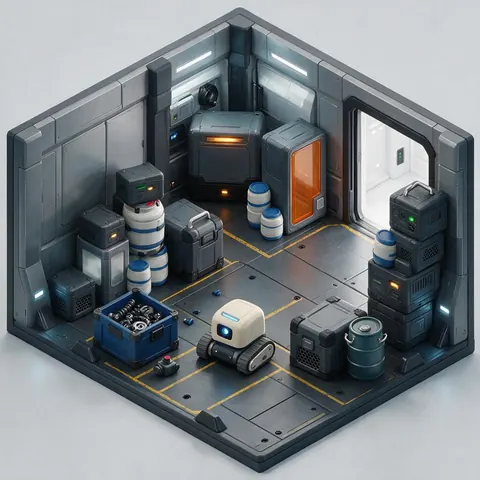
A game developer could make light, native-quad props on P2 and remove baked lighting so they relight properly in the engine.
Ceramics seller
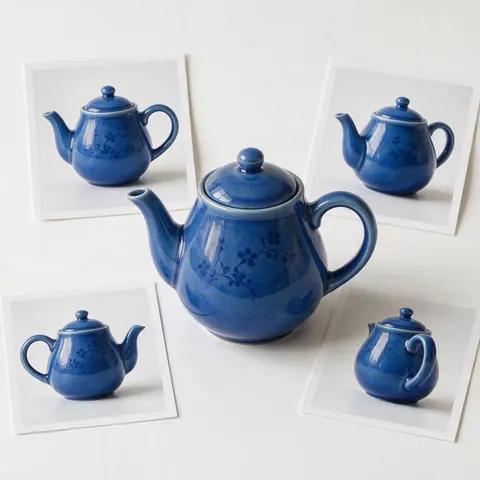
A seller could photograph a product from the front, left, back and right and give all four views to H3.1.

Toy maker
A toy maker could set the size in metres and send the model to a printer for a prototype.
FAQ
Tripo AI 3D Generator questions
8 questions
What is Tripo AI?
Tripo is an AI 3D model generator from Tripo AI, founded by VAST. It turns text and images into textured 3D models.
Link to this answerIs Tripo 3.1 the same as Tripo H3.1?
Yes — “Tripo 3.1” is the common name for Tripo H3.1, the high-detail model from early 2026.
Link to this answerWhat's new in Tripo P2?
P2 (21 Sep 2026) generates native quad meshes for production, with face budgets up to 25k quads or 50k triangles.
Link to this answerIs Tripo open source?
Tripo P2 and H3.1 are closed models. VAST has open-sourced earlier research models such as TripoSR and TripoSG under the MIT licence.
Link to this answerDo I need a Tripo account?
No — Tripo runs inside Kenerate's 3D Studio on any paid plan or credit pack.
Link to this answerIs Tripo AI safe to use?
Yes, as it runs here. You sign in to Kenerate only — no separate Tripo account — and each model is saved to your gallery as a standard GLB (plus FBX on P2) that opens in Blender, Unity or Unreal. Prompts are checked before a job runs, and adult 3D content is blocked.
Link to this answerWhich Tripo should I use?
H3.1 for detail and multi-view accuracy; P2 for light, clean meshes for games and real-time apps.
Link to this answerCan I use Tripo models commercially?
Use generated models in your projects; check Tripo's terms for any limits on its engines' output.
Link to this answerIn depth
Tripo AI 3D Generator, explained
Tripo's model line, native quads vs quad remesh, and choosing between P2 and H3.1.
On this page
Timeline
Native quads vs quad remesh
Most engines generate triangles; a quad option then retopologises the result. P2 is described as producing quads directly, aiming for edge flow that follows the form [24]. In our tests P2 meshes were a few thousand faces while H3.1 passed a million — two ends of the same trade-off.
Open source history
Tripo's maker released earlier research models such as TripoSR (with Stability AI) under the MIT licence; the production P2 and H3.1 models are not open source.
Try the Tripo AI 3D Generator
3D generation is part of every paid plan and credit pack. The free 3D tools — viewers, converters, image to STL — need no account.
Tried it? Tell us how it went