Binary + ASCII STL · mm → m · nothing uploaded
Convert STL to GLB free, in your browser
Put a 3D-print model on a website, in AR or in a game engine. Drop the STL, check it, and download a compact GLB at its real size and the right way up.
- Binary and ASCII STL
- Real size: millimetres written as metres
- Turned Y-up for glTF
- Private: runs on your device
Updated by the Kenerate AI team




On this page
Quick answer

How do you convert STL to GLB?
To convert STL to GLB, read the STL's triangles, turn the Z-up print model Y-up, scale its millimetres to glTF's metres and write it as a glTF 2.0 binary. Kenerate's free converter does all of that in your browser: drop a binary or ASCII STL, preview it and download the GLB. STL has no colour, so the GLB gets a neutral grey material. Nothing is uploaded.
Key facts
- Price
- Free, no account
- Converts
- STL (binary or ASCII) → GLB
- Scale
- Millimetres → metres, ticked for print-sized models
- Orientation
- Z-up print model → glTF Y-up
- Material
- One neutral grey PBR material
- Privacy
- Converted locally — no upload
Why this tool
From the print bed to the web
STL is the language of slicers; GLB is the language of browsers, AR and engines. The two disagree on units and on which way is up — this converter handles both.

Real size in AR
STL numbers are millimetres by print convention; glTF reads them as metres. The mm → m option divides by 1,000, so a 40 mm figure stays 40 mm in AR instead of 40 m. It's ticked for you when the model is 10 units or more across.
Try it
Check it first
Clay and Wire views show the faceting, holes and thin parts before you publish the model.
Try it
Also
What else it does
Right way up
Print files stand on Z; glTF stands on Y. The model is turned so it stands upright in web viewers and engines.
Binary and ASCII
Both kinds of STL open. Our test knot was 115 KB as binary STL, 706 KB as ASCII, and 167 KB as GLB either way.
How it works
How STL becomes GLB
All on your device.
Parse
Binary or ASCII STL is read into triangles with their normals.
Orient
The Z-up print model is turned Y-up for glTF.
Scale
Millimetres are written as metres (or units kept, if you untick the option).
Write
One mesh with a neutral PBR material is saved as a binary glTF file.
How to
How to use the STL to GLB Converter
- Time needed
- Steps
- 4 steps
Step 1
Open the STL
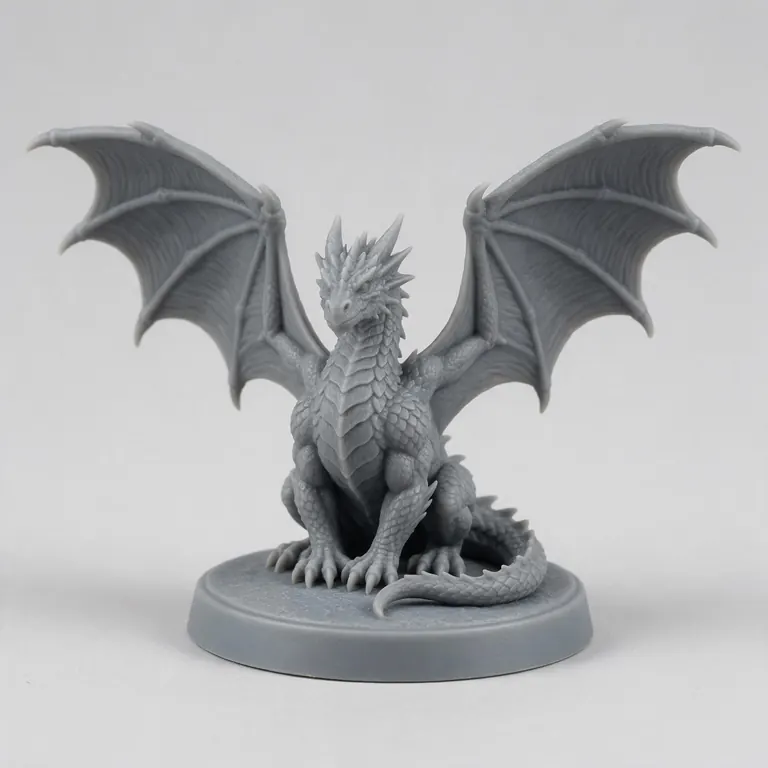
Drop your .stl onto the box above or click to choose it. Or try the sample dragon.
Step 2
Preview
Orbit it and check the triangle count and size.
Step 3
Check the units
GLB is selected. Tick “STL is in mm — write metres” for a millimetre print file; leave it off for a model already in metres.
Step 4
Download
Click Download GLB.
Watch the tour · 1:48
Text, photo or multi-view to a textured GLB, nine engines, the viewer & lighting, compare engines, gallery, download & chat
Chapters
Who uses it
Who converts STL to GLB
Print shops and designers
Show printable products as interactive 3D on a store page.
Makers
Share a model on the web or view it in AR at its real size.
Game and app developers
Use a printable model as a prop in Godot, Unity or Unreal.
Teachers
Put classroom print files in a browser viewer for students.
Compare
STL vs GLB
Both can hold the same triangles; GLB carries a lot more around them.
| STL | GLB | |
|---|---|---|
| Encoding | Binary or text | Binary |
| Units | None (millimetres by convention) | Metres |
| Up axis | Z (print convention) | Y |
| Colour and textures | No (non-standard extensions only) | PBR materials and textures |
| Typical use | 3D printing | Web, AR, game engines |
File formats
The formats this tool reads and writes
What each file can hold, what it can't, and where it opens. Facts link to the format's own spec or reference page.
| .stl · STL | .glb · GLB | |
|---|---|---|
| Full name | Stereolithography | glTF 2.0 Binary |
| Made by | 3D Systems, 1987 | Khronos Group, 2017 (glTF 2.0) |
| Kind | Triangle mesh (binary or ASCII) | Single-file scene with PBR materials |
| Holds | Triangle surfaces, Facet normals | Meshes and PBR materials, Textures in the same file, Animation and skins |
| No | Colour and textures, Units, Materials | Units beyond metres, CAD precision |
| Best for | 3D printing — every slicer opens it | Web, AR and real-time apps — the “JPEG of 3D” |
| Opens in | Cura, PrusaSlicer, Bambu Studio, OrcaSlicer, Blender | Browsers (three.js, model-viewer), Blender, Unity, Unreal, Godot |
No file yet?
Make the model first — from one photo
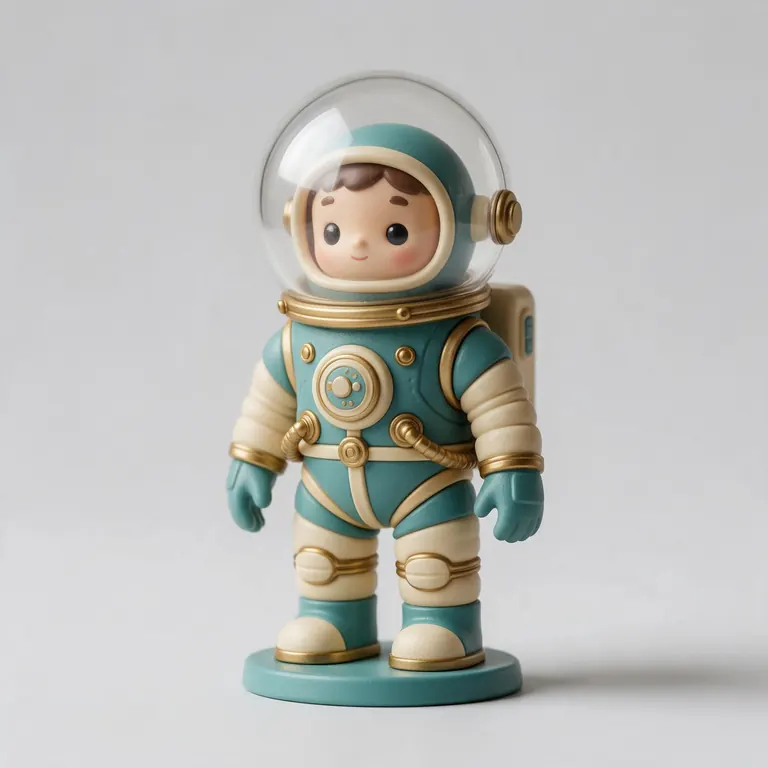
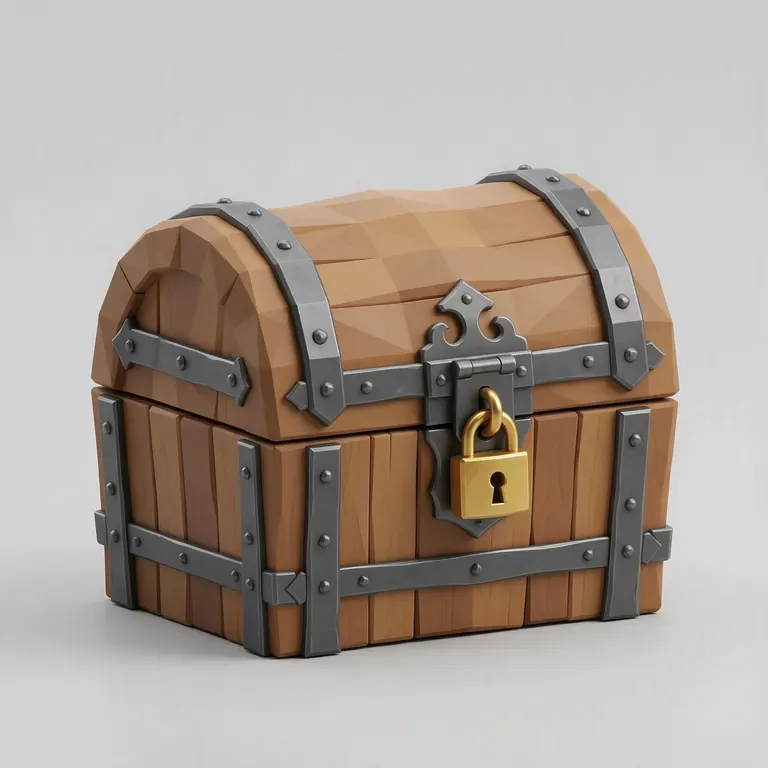
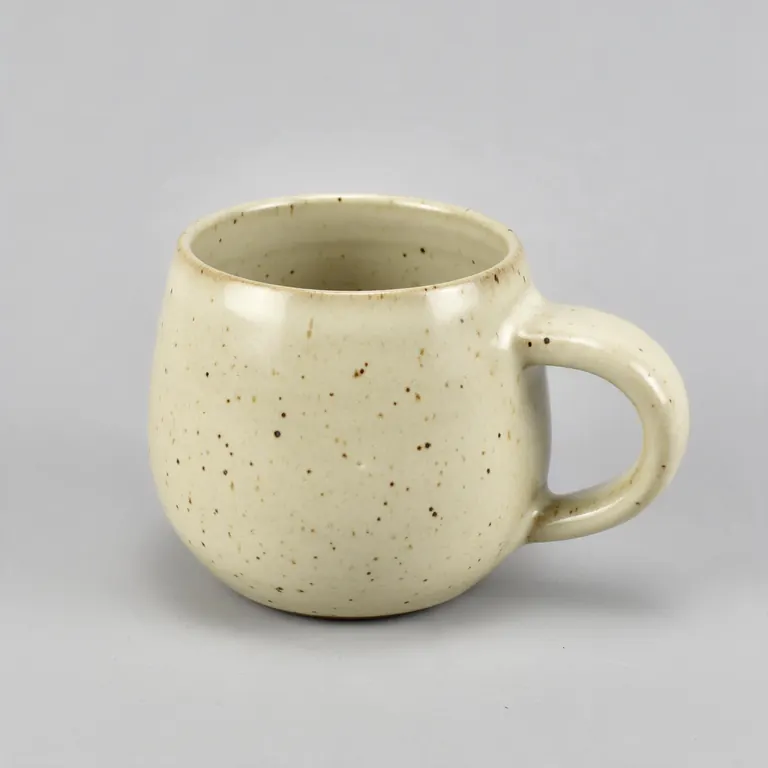
Every sample in the tool above began as a single picture and was turned into a 3D model in the Kenerate 3D Studio. The engine is named on each one.
FAQ
STL to GLB Converter questions
9 questions

Is STL to GLB conversion free?
Yes. It runs in your browser with no account and no watermark.
Link to this answerIs my STL uploaded?
No — it's converted on your device.
Link to this answerDoes it work with ASCII STL?
Yes. Binary and ASCII STL both open and give the same GLB.
Link to this answerWhy is my model 1,000 times too big in an AR viewer?
STL has no units, but print files are almost always millimetres, and glTF reads numbers as metres. Tick “STL is in mm — write metres” so the GLB comes out at its real size. It's pre-ticked when the model is 10 units or more across.
Link to this answerWhy is the GLB grey?
STL stores only triangles — no colour or texture — so the GLB gets one neutral grey material. Paint or texture it in Blender, or generate a textured model with AI.
Link to this answerWill my model be the right way up?
Yes. STL files stand on the Z axis by print convention; the converter turns the model so it stands on glTF's Y axis.
Link to this answerIs the GLB smaller than the STL?
Usually smaller than ASCII STL and a little larger than binary STL, because the GLB also stores per-vertex normals. Our 2,304-triangle test was 115 KB as binary STL and 167 KB as GLB.
Link to this answerCan I convert GLB back to STL?
Yes — use the GLB to STL converter, which can fit the model to a size in millimetres and turn it Z-up for slicers.
Link to this answerHow do I convert STL to GLB in Blender?
Import with File → Import → STL, then File → Export → glTF 2.0 and pick glTF Binary (.glb). Check the scale: Blender works in metres, so a millimetre STL may need scaling by 0.001.
Link to this answerIn depth
STL to GLB Converter, explained
What the formats really store, what changes when you convert, and how to avoid the usual print and import problems.
On this page
Inside an STL
STL, created for 3D Systems' first commercial printers in 1987, describes a surface as triangles and nothing else [1]. Binary STL has an 80-byte header, a 4-byte triangle count and 50 bytes per triangle (a normal, three corners, two attribute bytes); ASCII STL starts with the word solid [1].
It stores no units, colour or texture — scale is arbitrary, and colour only exists in non-standard variants [1].
Units: the part that goes wrong
glTF defines every distance in metres [8]. A 40 mm figurine written straight into a GLB becomes a 40-metre statue in AR. Scaling by 0.001 on the way out fixes that. The option is pre-ticked when a model is 10 units or more across, which for a print file means millimetres; AI-generated STLs are often only 1–2 units wide and are left as they are.
Why GLB for the web
Keep going
Other 3D viewers and converters
- 3D Model ConverterAny format to STL, OBJ, GLB, 3MF, USDZ
- 3MF to STLSlicer projects to plain STL
- GLB to STLAI models ready to print
- OBJ to STLMeshes for any slicer
- STL to OBJPrint files into 3D apps
- STL to 3MFUnits and a modern print format
- GLB to OBJglTF into classic 3D apps
- FBX to OBJStatic meshes from FBX
By the Kenerate AI teamLast updated and reviewed
We build the Kenerate 3D Studio and these free tools. They run on three.js in your browser, so files stay on your device; every sample model is a real output of the AI engine named on it. Technical facts link to their specs and manuals.
Sources: Wikipedia — STL (file format) · Wikipedia — Wavefront .obj file · Wikipedia — FBX · Khronos Group — glTF · 3MF Consortium — 3MF specification · Wikipedia — Universal Scene Description (USD / USDZ) · Wikipedia — PLY (file format) · Khronos Group — glTF 2.0 specification · Apple — AR Quick Look · three.js — documentation · Prusa Knowledge Base — Modeling with 3D printing in mind · Prusa Blog — lithophanes and filament transparency · Polymers (2024) 16(20):2862 — FFF parameters and translucency of PLA · Wikipedia — Lithophane · W3C — CSS Values and Units Level 3 (absolute lengths) · Adobe Substance 3D — OpenGL vs DirectX normal maps · Blender Manual — Normal Map node · Wikipedia — Normal mapping · SIL Open Font License · Paul Bourke — PLY: Polygon File Format

Try the STL to GLB Converter
Free and private — your files never leave your device. Want to make models with AI? That's the 3D Studio, on any paid plan or credit pack.
Tried it? Tell us how it went