Arabic audio or video → English speech · same voice
Arabic to English audio translation — Arabic speech in, English speech out, same voice
Upload an Arabic interview, lecture, vlog or voice message and get spoken English back in the speaker's own voice — audio you can listen to and share, not a subtitle file.
- Arabic in, English out
- Same speaker's voice
- Up to 15 min per file
- Audio and video files
Updated by the Kenerate AI team




Made with Kenerate


On this page
Quick answer

How do you translate Arabic audio to English?
To translate Arabic audio to English, upload a file of up to 15 minutes to an AI dubbing tool and choose English. On Kenerate AI, the ElevenLabs engine detects the Arabic, translates it and re-voices each speaker — up to 32 of them — in English with a clone of their own voice, so the output is spoken English, not subtitles. Video files up to 500 MB and audio files up to 50 MB work the same way, and it costs 3 credits per second of the source, billed only for the seconds you use.
Key facts
- Direction
- Arabic → English
- Source language
- Auto-detected, or pin Arabic
- Longest file
- 15 min · audio 50 MB · video 500 MB
- Speakers
- Auto, or 1 to 32
- Voices
- Each speaker's own, cloned
- Engine
- ElevenLabs dubbing
Real demo
A dub into English, same voice
How a translation into English sounds: a Spanish podcast host, then the English version. Arabic audio goes through the same tool.
- Spanish (original). A Spanish line spoken by MiniMax Speech 2.8 HD and lip-synced onto a Wan 3 clip.
- English dub. Kenerate's AI dubbing (ElevenLabs), source language auto-detected, same voice.
Both clips are unedited outputs. This is a Spanish demo: the Arabic version runs through the same tool. Turn the sound on to hear the difference.
Translate Arabic to EnglishReal demo
Another dub into English
A Jaipur vlog in Hindi, then in English, in the same voice.
- Hindi (original). A Hindi line spoken by MiniMax Speech 2.8 HD and lip-synced onto a Wan 3 clip.
- English dub. Kenerate's AI dubbing (ElevenLabs), source language auto-detected, same voice.
Both clips are unedited outputs of the same dubbing tool. Hindi shown; Arabic uses the same pipeline.
Translate your audioReal results
The kind of recordings people translate from Arabic
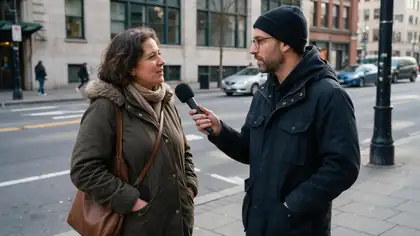
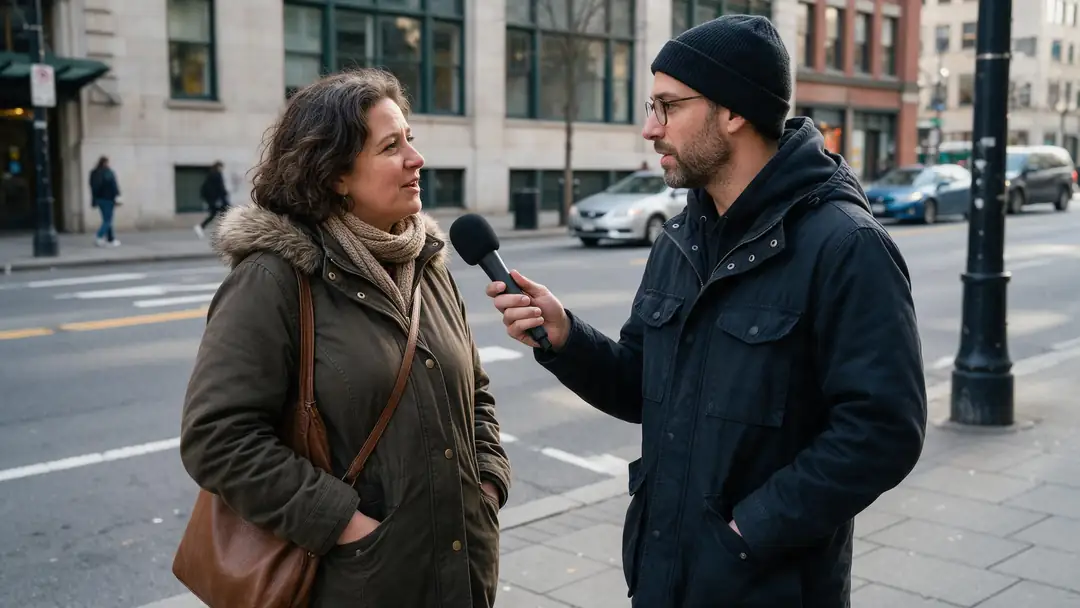
Interviews, lectures, city travel footage, reviews and creator videos: real 5-second clips of the recordings people bring to an audio translator.
Clips: Wan 3 and Kling 3.0 Pro image to video with sound (AI-generated people), from our other guides. They are not Arabic-language recordings.
How to
How to translate Arabic audio to English
- Time needed
- Steps
- 4 steps
Step 1
Open AI Dubbing
Sign in with a verified email; new accounts get starter credits to try it.
Step 2
Upload or record the Arabic
An audio file up to 50 MB or a video up to 500 MB, up to 15 minutes. For audio you can also record with the mic in the browser.
Step 3
Choose English
Leave the spoken language on Auto-detect or pin Arabic, and set the number of speakers for interviews and panels.
Step 4
Download the English version
Compare it with the original on the result card and download it. Turn on Drop background audio to keep only the voices.
See it in the app

Open AI Dubbing and upload a video or an audio file, or pick a clip from your history.


Watch the tour · 2:03
Video or audio, 33 languages, speakers & background, side-by-side compare, two voices, your dubs & chat
Chapters
Checked 30 October 2026
English audio, English text, or both?
Most online 'Arabic audio translators' return English text. Here is what each form is for, and how to get it.
| English audio (dub) | English transcript or captions | Dub + captions | |
|---|---|---|---|
| Best for | Podcasts, interviews, lessons people listen to | Reading along, quoting, keeping the original Arabic voice | Social videos watched with the sound off |
| What you hear | English, in the speakers' voices | The original Arabic | English, in the speakers' voices |
| What you read | Nothing | English text | English text burned into the video |
| How on Kenerate | AI Dubbing → English | Not offered: Auto Subtitles captions the spoken language and doesn't translate | AI Dubbing → English, then Auto Subtitles on the English video (up to 4 min) |
Auto Subtitles burns captions into the video and has no subtitle file export.
Sources: Kenerate AI Dubbing (tool) · ElevenLabs — Dubbing docs · Wikipedia — Arabic · Wikipedia — Varieties of Arabic
Engines
Tools for Arabic to English
Dub it, match the lips, caption it, all in one account.
- Start here
ElevenLabs
AI Dubbing → English
- Input
- Arabic audio or video, up to 15 min
- Output
- English speech in the same voice
Open AI Dubbing → EnglishBest for
The translation itself
VEED, Sync Labs, ByteDance
Lip sync
- Input
- Video + the dubbed audio
- Output
- Lips matched to the English
Open Lip syncBest for
On-camera speakers
MiniMax Speech 2.8
Voice Studio
- Input
- A written script
- Output
- Natural English or Arabic speech
Open Voice StudioBest for
Reading a translated script aloud
VEED
Auto Subtitles
- Input
- Video up to 4 min
- Output
- Burned-in captions in the spoken language
Open Auto SubtitlesBest for
English captions on the English dub
The demos above ran on the AI Dubbing tool.
Tips
Better Arabic to English translations
What helps most with spoken Arabic.
Arabic has many regional dialects (Gulf, Levantine, Egyptian, Maghrebi) that differ from Modern Standard Arabic. If the whole file is in one dialect, pin Arabic instead of leaving it on auto-detect.
Check names and place names: Arabic transliterates into English in several accepted spellings, so the English may differ from the spelling you expect.
Numbers, dates and prices are a common error spot. Verify quantities against the original.
Religious and formal phrases often have no direct English equivalent. Read the English for meaning, not word for word.
Use a clear recording with one speaker per track where you can. Background music and crosstalk lower accuracy.
For a video with faces on camera, add lip sync after dubbing.
FAQ
Arabic to English audio translation: questions
9 questions

How do I translate Arabic audio to English?
Upload the Arabic audio or video to Kenerate's AI Dubbing, leave the spoken language on Auto-detect or pin Arabic, choose English and download. You get English speech in the speaker's own voice.
Link to this answerIs there an Arabic audio to English translator online, without an app?
Yes — the whole thing runs in the browser at kenerateai.com: upload or record, pick English, download the English audio. Most online 'Arabic audio translators' return English text or subtitles; this one returns speech.
Link to this answerWhich Arabic dialects work?
The engine detects the spoken language and handles Modern Standard Arabic and regional speech. Results are most reliable on clear, single-dialect recordings, so pin Arabic if the file is all one dialect. Check the English on anything that matters.
Link to this answerWhich files can I upload?
Audio files up to 50 MB and videos up to 500 MB, up to 15 minutes each. You can also record audio with the mic in the browser.
Link to this answerWill the English sound like the original speaker?
Yes. Each speaker is re-voiced with a clone of their own voice, up to 32 speakers in one file — a conversation keeps its back-and-forth.
Link to this answerCan I get an English transcript instead of English audio?
Not as a file. Auto Subtitles writes captions in the language that is spoken and doesn't translate, so to read English, dub to English first and then caption the English version.
Link to this answerCan it translate English audio to Arabic?
Yes. Arabic is one of the target languages too, so upload English speech and pick Arabic instead.
Link to this answerHow much does Arabic to English audio translation cost?
3 credits per second of the source file, billed only for the seconds you use — a 30-second clip is 90 credits, a minute is 180. The cap is 15 minutes per file, and if a dub fails the credits are refunded automatically.
Link to this answerIs it free?
Kenerate isn't free to use, but new accounts get starter credits that work on AI Dubbing, enough to try a short Arabic clip. After that it's priced by length with one-time credit packs that never expire.
Link to this answerIn depth
Arabic to English audio translation, explained
Why spoken Arabic is harder than written Arabic, and what to check in the English.
On this page
Why spoken Arabic varies
Modern Standard Arabic is used in news, formal speech and writing. Everyday speech varies by region, and the dialects can differ enough from Standard Arabic that a listener from another region may need context [1]. The more clearly a recording sticks to one variety, the more reliable the English.
What to check in the English
Most errors in Arabic to English translation come from a few predictable places:
- Names and places: Arabic names have several accepted English spellings.
- Numbers and dates: quantities and prices are worth verifying against the original.
- Idioms and formal phrases: many do not translate word for word, so read for meaning.
- Gender and politeness: Arabic marks gender and formality in ways English does not, so tone may need to be checked [2].
What happens to the original audio
The Arabic speech is transcribed and translated, then each speaker is re-voiced in English with a clone of their voice and mixed back with the background sound [3]. Turn on Drop background audio to keep only the English voices.
Translate Arabic video to English AI
Videos work the same way, up to 500 MB and 15 minutes: the picture stays and the speech becomes English, in the same voices. Add lip sync for close-ups.
Arabic voice translator
Record straight from the mic in the browser, pick English, and play back the English version — useful for voice messages and quick checks.
Arabic audio to English translator online
No install: upload, pick English, download. The difference from most online tools is the output — spoken English in the original voice, not a text transcript.
Explore
Every Kenerate video tool
Generators, tools, models and guides — all in one studio.
By the Kenerate AI teamLast updated and reviewed
Sources: Kenerate AI Dubbing (tool) · ElevenLabs — Dubbing docs · Wikipedia — Arabic · Wikipedia — Varieties of Arabic

Translate your Arabic audio into English
One studio for images and video.
Tried it? Tell us how it went