
Phota Labs — founded by ex-Adobe AI researchers Cecilia Zhang and Zach Xia; a16z led its seed round (September 2025)
Phota
Phota Labs' photorealistic image model in your browser: natural-light portraits, lifestyle and product photos at 1K or 4K, plus edits with up to 10 reference images. No Phota account or API key.
- What it is for
- Photorealistic images: people in natural light, lifestyle scenes, product photos, and edits that keep the person or object recognisable
- On Kenerate
- kenerate/phota — text to image, plus edits with up to 10 reference images; 1K or 4K; 5 aspect ratios
- Not on Kenerate
- Phota Studio's trained identity profiles ([[profile]] prompts), Remix and batch generation

- Real outputs
- Official sources
- Free to start
- No watermark
Updated by the Kenerate AI team




On this page
What is Phota?
What is Phota?
Phota is the image model from Phota Labs, a start-up founded by former Adobe AI researchers and backed by a16z. It is tuned for photorealistic photos — candid portraits, lifestyle scenes and product shots — and has a companion Phota Edit for changing existing images. On Kenerate AI, Phota costs 27 credits at 1K and 54 at 4K, in five aspect ratios, and edits take up to 10 reference images. Phota Labs' trained identity profiles are not part of the Kenerate version.
Key facts
- Official name
- Phota
- Maker
- Phota Labs
- API IDs
- phota/text-to-image · phota/edit
- Resolution
- 1K or 4K
- Aspect ratios
- 1:1 · 3:4 · 9:16 · 4:3 · 16:9
- References
- Up to 10 (edits)
- Output formats
- JPEG · PNG · WebP
- Free plan
- No
Gallery
Phota examples
Real outputs made on Kenerate. Open any image to copy its prompt and run it yourself.
Models
Phota on Kenerate
Every version in the generator, and what each is good at.
Phota Labs
Phota
- Reference images
- Up to 10
- Output
- 1K · 4K · 5 ratios
Open PhotaBest for
Photoreal people + products
Google
Nano Banana 2.1
OpenAI
GPT Image 2.5
From our tests
Strengths and limits
Good at
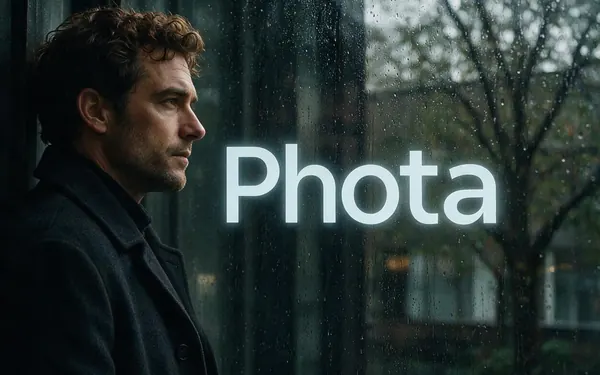
- Photos that look shot, not rendered: in our café test the light, skin texture and shallow depth of field read like a 50 mm lens.
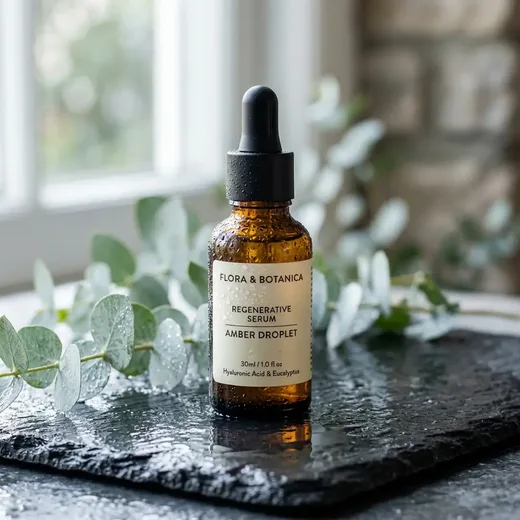
- Product shots hold small physical details — water droplets on glass, reflections on wet slate, a legible label.
- 4K output in one step (54 credits) when you need print or a large hero image, without a separate upscale.
- Edits with up to 10 reference images: change the scene or outfit while the person or product stays recognisable.
Limits
- No trained identity profiles on Kenerate — Phota Studio's personal models are on Phota Labs' own app and API.
- Not a design model: for logos, posters and layouts with lots of text use Recraft V4.1 or GPT Image 2.5.
- No seed, negative prompt or batch setting — one image per run; describe what you want rather than what to avoid.
- Five aspect ratios only (1:1, 3:4, 9:16, 4:3, 16:9).
- Not on Kenerate's free plan, and 27 credits is more than Nano Banana 2.1 (21) at 1K.
How to
How to use Phota on Kenerate
Step 1
Open the model
Go to /app/image and pick Phota (the button on this page selects it).
Step 2
Describe a photograph
Write it like a shot list: subject, what they are doing, where, the light (window light, golden hour) and the lens or depth of field.
Step 3
Pick ratio and resolution
3:4 for portraits, 1:1 for product tiles, 9:16 for stories, 16:9 for banners; 1K for drafts, 4K for the final.
Step 4
Edit with references
To change a photo, attach it (up to 10 images) and describe only the change and what must stay the same.
See it in the app

Open Image Studio and type what you want to see — subject, style, lighting and mood.


Watch the tour · 1:23
Prompts, styles, references, edit, Arena & chat
Chapters
FAQ
Phota questions
9 questions

What is Phota?
Phota is an image generation and editing model from Phota Labs, a start-up founded by former Adobe AI researchers Cecilia Zhang and Zach Xia and backed by Andreessen Horowitz. It focuses on photorealistic photos — people, lifestyle scenes and products — and on keeping a person's identity intact when an image is edited.
Link to this answerWho makes Phota?
Phota Labs. Andreessen Horowitz announced it was leading the company's seed round in September 2025, describing an app that 'reshoots' photos (fixing closed eyes, expressions or lighting) and a developer API. Phota Studio and the production API followed in 2026.
Link to this answerHow much does Phota cost?
On Kenerate, Phota costs 27 credits ($0.09) per 1K image and 54 credits ($0.18) per 4K image, for new images and edits alike. Credits come in one-time packs with no subscription. WaveSpeedAI lists the same $0.09 and $0.18 per image for its Phota API.
Link to this answerCan Phota make 4K images?
Yes. Choose 4K in the resolution setting and Phota renders the image at 4K directly, for 54 credits instead of 27. Draft at 1K and switch to 4K only for the final.
Link to this answerCan I edit photos with Phota?
Yes. Attach up to 10 reference images in the image studio and describe the change — a new background, outfit or lighting — plus what must stay the same. Phota Edit is built to keep the person or object recognisable.
Link to this answerIs Phota its own model or built on Nano Banana?
Reports differ. An invideo guide describes Phota as an identity layer that runs on top of base models such as Nano Banana 2, GPT Image 2, Qwen Image, FLUX 2 Dev and Reve, and LetzAI withdrew Phota from its platform in March 2026, calling it a Nano Banana wrapper. Phota Labs has not published a model card, so judge it on its outputs and price.
Link to this answerDoes Kenerate support Phota identity profiles?
No. Trained profiles — where you upload 5–50 photos and reference yourself in prompts — are a Phota Studio and Phota API feature. On Kenerate you get the text-to-image and edit model; for consistency, attach reference photos to each edit instead.
Link to this answerIs Phota free?
Not on Kenerate's free plan — any credit pack unlocks it. Free-plan models include Qwen Image 3.0 and FLUX.2 Klein if you want to test prompts first.
Link to this answerPhota vs Nano Banana 2.1 — which should I use?
Pick Phota for single photorealistic shots and 4K output from one prompt. Pick Nano Banana 2.1 (21 credits at 1K, up to 14 references) to keep the same product or character across many shots, or when cost matters.
Link to this answerIn depth
Phota, in depth
Background, how to prompt it, and when to pick something else.
On this page
Phota Labs and what Phota does
Phota Labs was started by two former Adobe AI researchers; Andreessen Horowitz led its seed round in September 2025, backing a photo app that “reshoots” pictures — fixing closed eyes, expressions or lighting while keeping the person and scene — and a developer API [1]. The Phota image model brings that photo-first approach to text-to-image and editing.
- Phota text-to-image — new photos from a prompt, 1K or 4K, in five aspect ratios plus auto in the API [2].
- Phota Edit — natural-language edits to existing images [2]; on Kenerate with up to 10 reference images.
- Identity profiles — personal models trained on your photos; a Phota Studio / Phota API feature, not on Kenerate [3].
Is Phota a new model or a layer on other models?
Phota Labs has not published a model card. An August 2026 guide describes Phota as an identity layer that routes requests to base models — Nano Banana 2 by default, plus GPT Image 2, Qwen Image, FLUX 2 Dev and Reve [3] — and LetzAI withdrew Phota in March 2026, saying it is a Nano Banana wrapper [4]. What matters on Kenerate is what you can check yourself: the outputs above and a flat 27 or 54 credits per image.
Prompting Phota for real-looking photos
Describe a photograph, not an illustration: who is in it, what they are doing, the setting, the light and the camera — “window light, shallow depth of field, 50 mm lens” pulls Phota toward a real shot. For products, name the material and surface (amber glass, wet slate) and the look you want (clean e-commerce, lifestyle). Phota has no negative prompt, so say what you want rather than what to avoid.
By the Kenerate AI teamLast updated and reviewed
We run these models in the Kenerate generator. Model facts come from the makers' own pages; specs and limits were checked against our code; the examples are our own outputs.
Sources: Investing in Phota Labs — Andreessen Horowitz · Introducing Phota Text-to-Image — WaveSpeedAI · Phota personalized AI images — invideo · Phota announcement (discontinued) — LetzAI